
The discovery of infidelity can shatter your world in an instant. The ground gives way, and one word may echo in your mind, a relentless and painful drumbeat: cheating cheating cheating cheating. It can feel impossible to think, to breathe, or to imagine a future that isn’t defined by this betrayal. If you’re feeling overwhelmed by shock, lost in a storm of heartbreak, and unsure how to even begin a conversation, please know you are not alone in this disorienting experience.
This guide is here to offer a compassionate, supportive space as you navigate the aftermath. It honours your unique story without judgment. We will gently explore the possibility of healing, providing a clear, step-by-step path to help you communicate through the pain, understand your options, and begin the journey of rebuilding trust-either with your partner or within yourself. You don’t have to have the answers right now; you just have to take the first step.
Key Takeaways
- Your initial feelings of shock, anger, and grief are valid; the first step is to give yourself compassionate space to process this pain without judgment.
- Learn how to explore the reasons behind the infidelity to prevent it from reoccurring, a crucial step that focuses on understanding context, not making excuses.
- Overcoming the mental loop of “cheating cheating cheating cheating” requires a clear framework for rebuilding trust, which is built on consistent, trustworthy actions over time.
- Discover how professional support can provide a safe, non-judgmental space to help you navigate the difficult decision of whether to rebuild or separate with clarity.
First Steps in the Aftermath: Acknowledging the Pain
The moment you discover your partner has been unfaithful, your world can feel like it’s fracturing. There is no right or wrong way to feel; there is only your way. You may be experiencing a tidal wave of emotions-from searing anger and deep betrayal to profound sadness and disbelief. Your mind might be racing, replaying scenes, the word cheating, cheating, cheating, cheating echoing in your thoughts. This is a traumatic event, and your reaction is a normal response to a deep wound.
Before any decisions about the future can be made, the first and most crucial step is to create a safe space for yourself. This isn’t about finding solutions or figuring out “what’s next.” It’s about surviving the initial impact. Grant yourself permission to feel everything without judgment. Your pain is valid, and honouring it is the first step toward healing. For many, gaining a broader perspective can be a small, grounding step; Understanding Infidelity provides a factual overview that can help contextualise the complex nature of this experience.
Navigating the Initial Shock
In these first hours and days, your primary job is self-preservation. It is vital to remember that you are not to blame for your partner’s choices. To manage the overwhelming feelings, try simple grounding techniques: focus on the sensation of your feet on the floor, take slow, deep breaths, or hold a warm cup of tea. These small actions can anchor you in the present moment when your thoughts are spiralling. Reach out to one trusted friend or family member who can offer non-judgmental support and simply listen.
Setting Temporary Boundaries for Safety
To process what has happened, you may need some immediate space. This doesn’t have to be a permanent decision; it could mean sleeping in a separate room or staying with a relative for a night or two. It’s about giving yourself breathing room. Communicate your essential needs as calmly and clearly as you can, for example, “I need some time alone right now.” Agree on temporary rules for communication-perhaps only texting about children or shared logistics. Most importantly, avoid making major, life-altering decisions in the heat of the moment. Give yourself the gift of time until the initial shock begins to subside.
Understanding Why It Happened: Finding Context, Not Excuses
In the overwhelming aftermath of an affair, the question ‘why?’ can feel both urgent and impossible to answer. While nothing can ever justify the betrayal, seeking to understand the underlying reasons is a crucial step toward healing. This exploration is not about finding excuses for the person who was unfaithful; it is about uncovering the context of the relationship’s breakdown to ensure it doesn’t happen again, whether you stay together or move forward separately.
The choice to cheat is always separate from the reasons behind it. Understanding this distinction allows you to explore the issues without validating the hurtful actions. It is a journey into the vulnerabilities that existed within an individual or the partnership itself.
Common Reasons for Infidelity
Infidelity is rarely simple and often stems from a complex mix of factors. It is vital to remember that none of these reasons place blame on the betrayed partner. The responsibility for cheating lies solely with the person who made that choice. Common contributing factors can include:
- Individual factors: Personal struggles such as low self-esteem, a history of trauma, a mid-life crisis, or addiction can make a person more vulnerable to making destructive choices.
- Relationship dynamics: Issues within the partnership, like persistent emotional distance, a lack of physical intimacy, or unresolved conflicts, can create a void.
- External stressors: Significant life changes, intense work pressure, or financial strain can place a heavy burden on a relationship, weakening its foundations.
The Role of Communication Breakdown
Often, the path to infidelity is paved with silence. When partners stop turning toward each other with their needs, fears, and resentments, they begin to turn away. This communication breakdown can create a breeding ground for disconnection, where unspoken frustrations build until one partner seeks validation or connection elsewhere. The silence and distance created by this breakdown can leave a space where the destructive pattern of cheating cheating cheating cheating takes root, making it feel impossible to find your way back to each other.
Differentiating an Exit Affair from a Cry for Help
Understanding the motivation behind the affair is key to deciding your next steps. Sometimes, an affair is an ‘exit affair’-a conscious or subconscious way for a person to end a relationship they no longer want to be in. Other times, it is a deeply misguided ‘cry for help’-a destructive way of signalling profound unhappiness without necessarily wanting the relationship to end. For couples hoping to move forward, having a structured approach can be invaluable; this resource offers a guide to rebuilding your marriage that provides practical steps for both partners on this difficult journey.
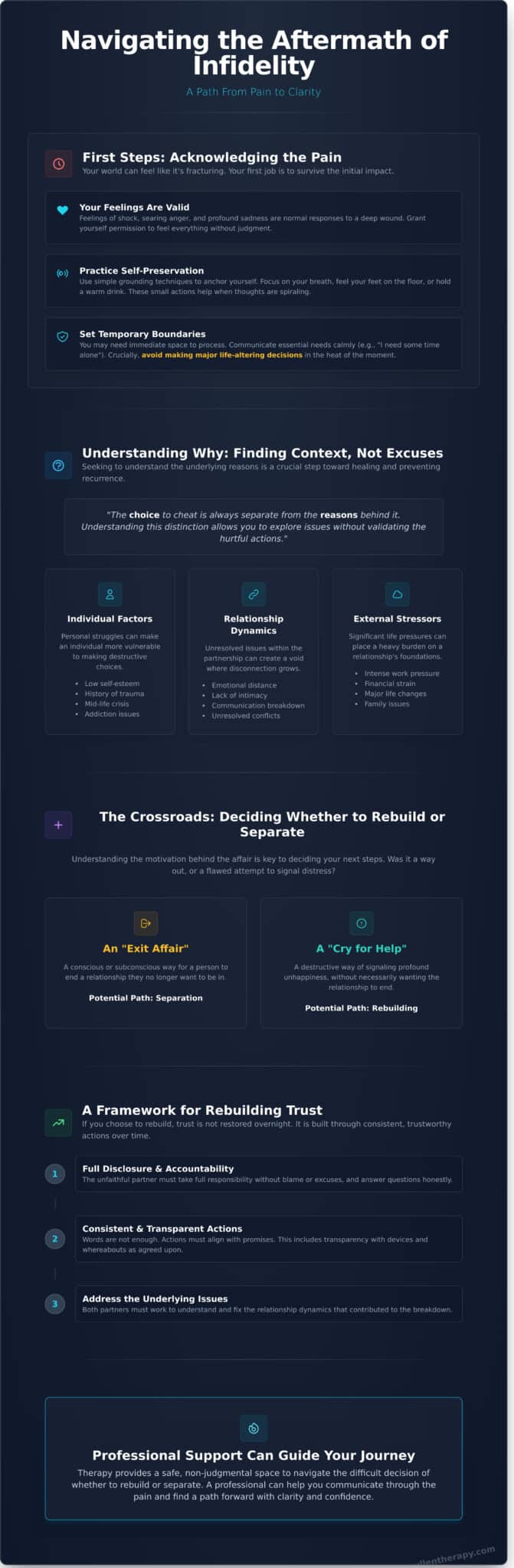
The Crossroads: Deciding Whether to Rebuild or Separate
After the initial shock of infidelity, you arrive at a painful and confusing crossroads. The question of whether to stay or leave can feel overwhelming, and it’s important to honour that this is a deeply personal decision with no universal right or wrong answer. The path forward depends entirely on your unique circumstances, history, and a realistic assessment of what the future could hold.
One thing is certain: healing is not a passive process. For a relationship to have any chance of recovery, both partners must be fully and actively committed to the hard work ahead. A non-negotiable starting point is genuine, heartfelt remorse from the partner who was unfaithful. Without it, there is no foundation upon which to rebuild.
Signs a Relationship Can Be Repaired
While it may feel impossible in the midst of such pain, repair is achievable if certain elements are present. These signs can offer a glimmer of hope:
- Sincere Accountability: The person who cheated takes full, unwavering responsibility for their actions, without excuses or blame-shifting.
- Commitment to Transparency: They are willing to answer difficult questions honestly, end the affair completely, and offer access to their communications to help rebuild a sense of safety.
- A Foundation of Love: Beneath the anger and hurt, you both can still connect with the love, respect, and shared history that formed the basis of your relationship.
- Shared Desire to Understand: Both partners are open to exploring what led to the breakdown in the relationship, including pre-existing issues that may have contributed to the vulnerability.
When Separation Might Be the Healthier Path
Sometimes, the kindest and most self-respecting decision is to walk away. Separation may be the healthier path if you recognise these patterns:
- A Lack of True Remorse: Your partner is sorry they got caught, not for the pain they caused. They may minimise their actions or try to shift the blame onto you or the relationship.
- A Pattern of Betrayal: If the trust is shattered by a pattern of cheating cheating cheating cheating, or the affair is still ongoing, it is not a safe environment for healing.
- Erosion of Self-Worth: The betrayal has so deeply damaged your self-esteem that staying in the relationship feels like a daily act of self-abandonment.
- An Unhealthy Foundation: You realise that even before the infidelity, the relationship was characterised by disrespect, control, or unhappiness.
Questions to Ask Yourselves and Each Other
To find clarity, it can be helpful to reflect on these questions, both individually and, if possible, together. There are no easy answers, but the process of asking can illuminate the path forward.
- What would a new, rebuilt relationship need to look like for us to both feel safe and fulfilled?
- Are we both genuinely willing to commit to the time, effort, and vulnerability required in couples therapy?
- Can I, the betrayed partner, ever truly move towards forgiveness (which is for me) and rebuild trust (which is for us)?
- What concrete boundaries and changes in behaviour are needed for us to create a secure future together?
A Framework for Rebuilding Trust: A Step-by-Step Guide
Rebuilding trust after an affair is a journey, not a destination. It is a slow, often non-linear process that demands immense patience and compassion from both partners. The cycle of thoughts after discovering cheating cheating cheating cheating can feel relentless and all-consuming, but there is a path forward. Lasting change is built on a foundation of consistent, trustworthy actions over a long period. This framework is not a quick fix, but a grounded, step-by-step guide to help you navigate this difficult terrain together. Each step is essential for dismantling the old, broken dynamic and co-creating a new, more resilient relationship.
Step 1: Ending the Affair and Ensuring Full Transparency
The very first step must be an absolute and unequivocal end to the affair. There can be no ambiguity. This means cutting off all contact with the third party-no calls, texts, social media connections, or “accidental” run-ins. To demonstrate a genuine commitment to healing, the unfaithful partner must offer voluntary transparency. This is not about control, but about creating a sense of safety for the betrayed partner. This may include:
- Sharing phone and social media passwords.
- Allowing access to emails and bank statements.
- Being open about whereabouts and daily schedules.
This difficult step shows a willingness to live an honest, open life and is a critical gesture of good faith.
Step 2: Taking Full Responsibility and Expressing Remorse
A sincere, heartfelt apology is crucial, but it must go beyond a simple “I’m sorry.” The unfaithful partner needs to take full ownership of their actions without excuses, defensiveness, or blame. The focus must be on understanding and validating the profound pain they have caused. This involves patiently and honestly answering the betrayed partner’s questions, even if they are repetitive. This process, while painful, is about rebuilding emotional safety by showing true remorse and accountability for the betrayal.
Step 3: Co-Creating a New Relationship Agreement
The relationship that existed before the infidelity is over. To move forward, you must consciously build a new one together. This involves sitting down to co-create a new “relationship agreement” with clear boundaries and expectations. You are not trying to fix what was broken, but to build something stronger. This agreement should define what you both need to feel safe and connected, including new rules for communication, boundaries with others, and scheduling regular, intentional time to connect emotionally. Agreeing on a plan for how to handle triggers and difficult memories when they arise is also a key part of this new foundation. Navigating this journey is incredibly challenging, and you don’t have to face it alone. Working with a professional can provide a supportive, non-judgmental space to guide these conversations and help you rebuild.
How Therapy Can Support Your Healing Journey
Navigating the emotional fallout of an affair can feel incredibly isolating and overwhelming. The repetitive, painful thoughts-cheating, cheating, cheating, cheating-can feel impossible to escape on your own, and conversations often spiral into blame and hurt. This is where professional support can make a profound difference. A therapist provides a calm, neutral, and non-judgmental space, offering guidance and structure when the path forward feels impossibly foggy. It’s a space to breathe, process, and begin the difficult work of healing.
The Role of Couples Counselling
Couples counselling offers a structured environment where you can both be heard and understood. A therapist acts as a facilitator, ensuring that difficult conversations remain productive rather than destructive. The goal isn’t just to rehash the pain, but to build a new foundation. Together, we can:
- Facilitate Difficult Conversations: Create a safe container to discuss the infidelity, express hurt, and ask questions without the conversation escalating into a fight.
- Identify Underlying Issues: Explore the dynamics and unmet needs within the relationship that may have contributed to the affair, going beyond the surface-level betrayal.
- Teach New Communication Skills: Learn healthier, more effective ways to communicate needs, fears, and emotions to prevent future breakdowns.
- Provide a Roadmap for Repair: Develop a clear, step-by-step plan for rebuilding trust, fostering intimacy, and deciding on the future of your relationship.
Why Individual Therapy is Also Important
While couples work is vital for the relationship, individual healing is just as crucial. Each partner has their own unique journey to navigate, and individual therapy provides a private space to do so. This is a compassionate space to focus entirely on your own needs and growth.
- For the Betrayed Partner: This is a place to process the deep trauma, grief, and anger that comes with betrayal. Therapy can help you rebuild your self-esteem and sense of security, which is often shattered after cheating.
- For the Unfaithful Partner: This is an opportunity to understand the motivations behind your actions without shame. It’s a space to explore personal vulnerabilities, self-worth, and develop healthier coping mechanisms.
Ultimately, healing yourself as a person makes you stronger, whether you stay in the relationship or move on.
Taking the First Step
Deciding to seek professional guidance is not a sign of failure; it is a sign of immense strength and commitment to your well-being. Finding the right therapist-someone you feel comfortable and safe with-is the most important part of this process. You have already endured so much pain, and you don’t have to navigate the next steps of this painful journey alone. If you are ready to explore a path toward healing, I am here to help.
Learn more about starting couples or individual therapy.
Navigating Your Next Steps with Compassion
The journey after infidelity is complex and deeply personal. Healing begins with bravely acknowledging the pain and exploring the reasons behind the breach of trust. Whether you choose to rebuild your relationship or forge a new path separately, remember that this process is about more than just surviving; it’s about reclaiming your sense of peace. The shock can leave the words cheating cheating cheating cheating echoing in your mind, making it feel impossible to find clarity.
But you don’t have to navigate this overwhelming time by yourself. As a therapist experienced in helping couples navigate relationship crises, I provide a warm, supportive, and non-judgmental space to process what has happened. My integrative approach is designed to honour your unique story, helping you find a way forward that feels true to you. If you’re struggling to heal, you don’t have to face it alone. Reach out to start your therapy journey.
Healing is possible, and a more connected, grounded future is within your reach.
Frequently Asked Questions About Healing from Infidelity
Can a relationship ever be the same after cheating?
Honestly, a relationship is never exactly the same after a betrayal. However, this doesn’t mean it cannot become strong again-sometimes even stronger. The journey involves rebuilding trust from the ground up and creating a new, more honest foundation. It’s a process of creating a new “us,” one that is more resilient and conscious. Rather than aiming for what you had, the goal is to build something new and more fulfilling together.
How long does it take to get over the pain of being cheated on?
There is no set timeline for healing, and it’s important to be compassionate with yourself. The recovery process is a unique journey for every individual, influenced by the specifics of the situation and your personal support system. It’s a path with ups and downs, not a straight line. Allowing yourself the space and time to grieve is essential. A supportive therapist can help you navigate these feelings in a safe, non-judgmental environment, honouring your pace.
What should I do if my partner refuses to go to couples therapy?
It can feel incredibly isolating when your partner is unwilling to attend therapy. While you can’t force them, you can take control of your own healing. Seeking individual counselling is a powerful step. It provides you with a dedicated, supportive space to process your emotions, gain clarity, and explore your options for the future. You don’t have to face this difficult journey alone; focusing on your own well-being is a valid and crucial priority.
Is it my fault that my partner cheated on me?
Let me be very clear: it is never your fault that your partner chose to cheat. While no relationship is perfect, the decision to be unfaithful rests solely with the person who made that choice. It is a reflection of their own issues, not a measure of your worth. Self-blame is a common response to such a deep betrayal, but it’s essential to understand that you are not responsible for their actions. Your story deserves to be heard without judgment.
What is the difference between emotional and physical infidelity?
Physical infidelity involves sexual or romantic contact outside the established relationship. Emotional infidelity, on the other hand, is about forming a deep, secret, and intimate bond with someone else that violates the emotional trust of your partnership. Both forms of cheating break the fundamental agreements of a committed relationship and can be profoundly painful. The impact of either often comes down to the betrayal of trust and the breaking of a secure connection.
How can I stop the intrusive thoughts and images of the affair?
Intrusive thoughts and mental images are a very common trauma response after discovering infidelity. Trying to force them out can often make them feel more powerful. Instead, grounding techniques can help bring you back to the present moment. In a therapeutic space, we can work together to explore these thoughts without judgment, helping to reduce their intensity over time. As you heal from the experience of cheating, these intrusive thoughts will begin to lessen their hold.