
If you’re exploring therapy, the idea of meeting through a screen can bring up a lot of questions. Can you really build a genuine, trusting connection with someone you’ve never met in person? Is it as effective or as ‘real’ as sitting in a therapist’s office? If you’re feeling hesitant, overwhelmed by the options, or simply unsure about starting a journey with online therapy, please know that your concerns are completely valid. Taking this step is a significant decision, and you deserve to feel grounded and confident in your choice.
For instance, a specialist practitioner like Danny Nuttall might list qualifications in Hypnotherapy and CBT, giving you a clear idea of their specific approach and areas of expertise.
This guide is here to offer a warm, down-to-earth perspective from a therapist who understands those uncertainties. My goal is to help you look beyond the screen and explore the heart of what makes therapy work. Together, we’ll navigate the real benefits and challenges of digital sessions, uncover what creates a truly supportive connection, and give you the clarity to decide if this path is the right one to honour your unique story. You don’t have to figure this out alone.
Key Takeaways
- Learn why research shows that a strong therapeutic connection can be just as effective online as it is in person for many conditions.
- Discover how the flexibility of online therapy can remove practical barriers, making it easier to start and commit to your journey of self-discovery.
- Gain an honest look at the potential challenges of virtual sessions and find practical ways to ensure your experience feels connected and secure.
- Receive clear, actionable steps for choosing the right therapist for you, focusing on the human relationship that is central to healing.
What Online Therapy Really Means: Beyond the Apps
When you hear the term online therapy, your mind might jump to an app on your phone or a faceless chat service. While technology is the bridge, it’s important to remember what’s at the other end: a qualified, compassionate professional dedicated to supporting you. At its heart, online therapy is simply a professional therapeutic relationship facilitated by digital tools. It’s a way to access a safe, non-judgmental space to explore your thoughts and feelings from a place where you feel most comfortable.
The core principles that make therapy effective-trust, safety, and a strong human connection-remain exactly the same. The goal isn’t to replace the human element, but to make it more accessible. Whether you’re feeling overwhelmed, stuck, or simply want to understand yourself better, this method of support honours your unique story just as in-person therapy does. For a foundational overview, you can explore this resource on What is Online Therapy? to understand its history and different forms.
Platforms vs. Private Practice: What’s the Difference?
As you begin your search, you’ll likely encounter two main models. Understanding them can help you make a choice that feels right for you.
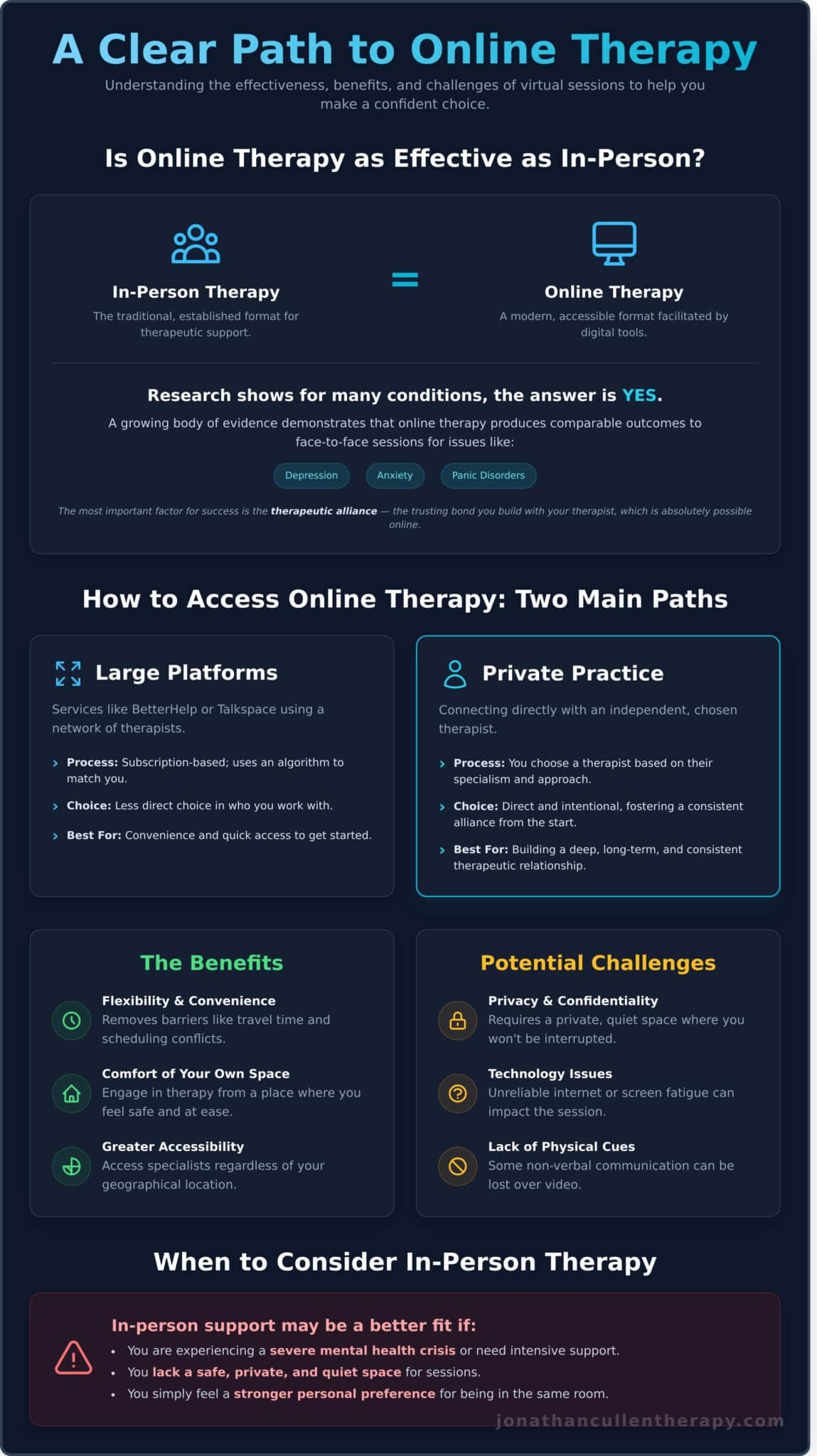
- Large Platforms (e.g., BetterHelp, Talkspace): These services often use a subscription model and an algorithm to match you with a therapist from their network. While they offer convenience and quick access, the choice of therapist is less direct, and you may not always work with the same person if your initial match isn’t a good fit.
- Private Practice Therapists: This involves connecting directly with an independent therapist who offers online sessions. You choose your therapist based on their specialisms and approach, building a consistent, long-term therapeutic alliance from the very beginning. This consistency is often vital for deep, transformative work.
Common Methods: Video, Phone, and Messaging
Your sessions can take a few different forms, each with its own benefits. Most therapists will offer a primary method for sessions and may use others as a supplement.
Video conferencing is the most common, as it most closely resembles an in-person session, allowing for visual cues and a strong sense of connection. Phone sessions are a wonderful, grounded alternative if you have unreliable internet or experience screen fatigue. While some services offer text-based messaging, this is often best used as a supportive tool for check-ins rather than a replacement for live, dedicated session time.
The Core Question: Is Online Therapy as Effective as In-Person?
Let’s address the question on your mind directly. For many people and many common challenges, the answer is yes, online therapy can be just as effective as meeting a therapist in person. The ultimate success of your therapy journey isn’t really about the format-it’s about the connection you build, the work you do together, and whether the approach feels right for you and your unique story.
What the Research Says
You don’t just have to take our word for it; a growing body of evidence supports the value of virtual sessions. A great deal of research on online therapy effectiveness has demonstrated that it produces outcomes comparable to face-to-face therapy for issues like depression, anxiety, and panic disorders. Modalities such as Cognitive Behavioural Therapy (CBT) have been shown to translate particularly well to a digital format, helping people achieve meaningful, lasting change from the comfort of their own space.
The Power of the Therapeutic Relationship
The single most important factor in successful therapy is what’s known as the ‘therapeutic alliance’. This is the trusting, non-judgmental, and collaborative bond you form with your therapist-the feeling of being truly seen and heard. This connection is absolutely possible to build online. Through focused video sessions, therapists use active listening, pay close attention to body language and tone of voice, and create a dedicated, supportive space where emotional depth is not lost. A screen doesn’t have to be a barrier; it can be a bridge to getting the support you need.
When In-Person Therapy Might Be a Better Fit
While online therapy is a powerful and accessible tool, it’s important to be honest about its limitations. Finding the right support is what matters most, and sometimes that means a traditional setting. In-person therapy might be a better choice if:
- You are experiencing a severe mental health crisis or have a condition that requires intensive, hands-on support.
- You don’t have a safe, private, and quiet space at home where you can speak openly without interruption.
- You simply feel a stronger sense of connection and comfort from being physically present in the same room as your therapist.
The Practical and Emotional Benefits of Online Sessions
Knowing that therapy can be effective is the first step, but the next question is often more personal: ‘How can it actually work for me?’ The decision to seek support is a significant one, and practical hurdles or feelings of anxiety can often stand in the way. Beyond the clinical data, the real power of online therapy lies in how it dismantles these common barriers, making compassionate, professional support more accessible in your day-to-day life.
Unmatched Accessibility and Convenience
For many people, the biggest obstacle to starting therapy is simply getting there. Online sessions remove these logistical walls entirely. Suddenly, you’re no longer limited to practitioners in your town or city; you can find the right therapist for you, anywhere in the UK. This flexibility extends to your schedule. Without the need for travel, a session can fit into a lunch break or a quiet evening, saving you precious time and energy. This is especially vital for individuals managing mobility issues, chronic illness, or caregiving responsibilities, for whom leaving home can be a significant challenge.
The Comfort and Safety of Your Own Space
The therapeutic journey is deeply personal, and your environment plays a huge role in how safe you feel. By meeting from your own home, you can bypass the anxiety of a new, unfamiliar setting. You are in a space that is already familiar and grounding, which can help you feel more open from the very first session. This comfort isn’t a small detail; extensive research on the effectiveness of teletherapy supports its value, and feeling safe allows the process to truly unfold. You can have your pet curled up nearby or a favourite cup of tea in hand, allowing our work to begin from a place of genuine ease.
You deserve a space where you feel safe. Let’s create one together.
Navigating the Potential Challenges of Online Therapy
While the benefits are clear, it’s completely understandable to have questions or concerns about starting online therapy. Acknowledging these potential hurdles is the first step towards overcoming them. These are not deal-breakers, but simply aspects to be mindful of as you begin your journey. By addressing them openly, we can create a supportive and effective therapeutic space, wherever you are.
Creating a True Connection Through a Screen
One of the most common fears is that therapy through a screen might feel distant or impersonal. It’s a valid concern, but a strong therapeutic connection is built on trust, empathy, and understanding-not physical proximity. Therapists are skilled at reading subtle non-verbal cues, even on video. To help foster this connection, you can:
- Use the best camera and device you have available for a clear picture.
- Close other tabs and put your phone away to remain fully present.
- Remember that your therapist is 100% focused on you and your story.
Managing Technology and Privacy
Practicalities like technology and privacy are crucial for successful online therapy. You will need a stable internet connection and a private device. Finding a confidential space can feel tricky, especially if you live with others. This could be a bedroom, a home office with the door closed, or even your car (while parked). Professional therapists in the UK are bound by strict confidentiality ethics (from bodies like the BACP) and use secure, encrypted platforms to ensure your sessions are completely private.
Staying Grounded Without a Shared Physical Space
The ritual of travelling to an appointment helps create a mental transition into the therapeutic space. We can recreate this at home. Try to take 5-10 minutes before your session to sit quietly, perhaps with a cup of tea, and gather your thoughts. Afterwards, give yourself a few moments to reflect before re-joining your day. A skilled therapist helps create a focused ‘bubble’ online, ensuring the session feels contained, safe, and entirely dedicated to you.
These challenges are manageable with a little preparation and open communication. If you have more questions about how this works in practice, I offer a free introductory call to help you feel more comfortable.
How to Choose the Right Online Therapist For You
Once you’ve decided that online therapy could be a good fit, the next step is finding the right person to support you. The technology is simply the medium; the most critical factor in successful therapy, whether online or in-person, is the quality of the relationship you build with your therapist. Feeling safe, understood, and genuinely connected is the foundation of meaningful change.
Here are a few practical steps to help you find a therapist who truly honours your unique story.
Look for Credentials and Specialities
First, ensure any potential therapist is professionally qualified and registered with a recognised UK body, such as the BACP or UKCP. This guarantees they adhere to strict ethical and professional standards. Beyond qualifications, look for someone with experience in the specific areas you need help with, whether that’s anxiety, relationships, or neurodivergence. Don’t hesitate to ask about their experience working online; a skilled therapist can create a strong connection through a screen.
The Importance of the Initial Consultation
Most independent therapists offer a free or low-cost initial consultation. This is an invaluable, no-obligation opportunity to see how you feel talking to them. It’s less of an interview and more of a chemistry check. Do you feel heard? Do you sense a warmth and non-judgmental acceptance? To make the most of this chat, you could prepare a few questions, such as:
- What is your therapeutic approach?
- How do you help clients feel comfortable and safe in online sessions?
- What can I expect from our work together?
Why a Consistent, Independent Therapist Matters
While large platforms can seem convenient, you may be passed between different therapists, making it difficult to build the deep, trusting relationship that facilitates healing. Working consistently with one independent therapist means you have a dedicated partner on your journey. This person gets to know your story in depth, understands your patterns, and provides a stable, supportive space where you can truly explore what’s holding you back. This consistency is key to building the trust necessary for transformative work.
Ultimately, finding the right fit is a personal decision. It’s about who you feel you can trust to walk alongside you. If you feel we might be a good fit, I invite you to book a consultation.
Finding Your Connection Through Online Therapy
The digital landscape has transformed how we access support, but the core of effective therapy remains unchanged: the connection you build with your therapist. As we’ve explored, the evidence is clear that online therapy can be just as powerful and life-changing as traditional sessions. It offers a uniquely flexible and accessible path to healing, overcoming barriers of distance and time. Ultimately, the key to success isn’t the screen between you, but the sense of safety, trust, and understanding you build together.
Finding the right therapist is the most important step on your journey. I provide a warm, down-to-earth, and non-judgmental space for clients navigating anxiety, trauma, and ADHD. Together, using an integrative approach that honours your unique story, we can work towards building a more connected and fulfilling life. You don’t have to face it alone. Reach out to schedule a consultation today.
Frequently Asked Questions About Online Therapy
Is online therapy confidential and secure?
Absolutely. Your privacy is paramount. Professional therapists in the UK are bound by strict ethical codes from bodies like the BACP or UKCP, as well as GDPR data protection laws. We use secure, encrypted video platforms designed for healthcare to ensure our conversations remain completely confidential. It’s also important that you find a private, quiet space for your session where you won’t be overheard, creating a secure and supportive environment at both ends of the call.
What kind of technology or equipment do I need for an online session?
You don’t need any complex technology. The essentials are a reliable internet connection and a device with a camera and microphone, such as a laptop, tablet, or smartphone. Using headphones can also improve sound quality and enhance your privacy. Most importantly, find a comfortable and private space where you can speak freely without interruptions. This ensures your session is a calm and focused experience, allowing you to get the most from our time together.
Can I do couples therapy online, and is it effective?
Yes, couples therapy can be very effective online. It offers a flexible way for you and your partner to connect with a therapist from a space that feels comfortable, whether you’re in the same room or different locations. The core of the work remains the same: creating a non-judgmental space to explore communication and connection. The key is ensuring you both have a stable connection and can engage without distractions to make meaningful progress together.
How much does online therapy with a private therapist cost in the UK?
The cost of private online therapy in the UK can vary depending on the therapist’s experience, location, and specialisation. Typically, you can expect to pay between £50 and £120 for a standard 50-minute session. Many therapists also offer a free or reduced-cost initial consultation to ensure they are the right fit for you. It’s always best to check an individual therapist’s website for their specific fees and any concessionary rates they might offer.
What happens if our internet connection drops during a session?
It’s understandable to worry about technical issues, but we always have a plan. If our connection is lost, the first step is to simply try and reconnect to the video call. If that doesn’t work after a minute or two, I will call you on the phone number you’ve provided so we can continue our session. Any significant time lost due to technical problems on my end will be added to our next session, ensuring you always receive your full, dedicated time.
Can I switch between online and in-person sessions with the same therapist?
This is a great question, and for many therapists, the answer is yes. This is often called ‘blended’ or ‘hybrid’ therapy and offers wonderful flexibility. However, it depends entirely on the therapist’s individual practice and whether they have a physical office in a location that is convenient for you. The best approach is to discuss this possibility during your initial consultation to see if it’s an option they can support, ensuring the arrangement works for your journey.