
When life feels heavy and the challenges keep coming, it’s completely understandable to feel overwhelmed. You might find yourself emotionally exhausted, struggling to cope with setbacks, and perhaps even believing that you’re simply not a ‘strong’ person. But what if that strength isn’t about being unbreakable, but about learning how to gently find your footing again? This is the very heart of resilience-a quiet, compassionate skill that can be nurtured within all of us, no matter how stuck we may feel right now.
You don’t have to navigate this alone. This guide offers a warm, supportive space to explore practical, down-to-earth strategies for building lasting emotional wellbeing. Together, we will walk through gentle, step-by-step approaches that honour your unique story, helping you to manage stress more effectively, recover from adversity with greater ease, and feel more capable of handling whatever life brings your way. It’s time to discover the strength that already lies within you.
Key Takeaways
- Understand what resilience truly means-it’s not about avoiding hardship, but about learning to adapt with self-compassion.
- Discover the vital link between your physical and emotional wellbeing, and why nurturing your body is a foundational step.
- You don’t have to navigate difficult times alone; learn how meaningful connections can validate your experience and build lasting resilience.
- Explore gentle, practical mental tools that create flexibility in your thinking without forcing positivity.
- Recognise when seeking professional support is a powerful step for growth, not just a response to a crisis.
What is Resilience (and What It Isn’t)?
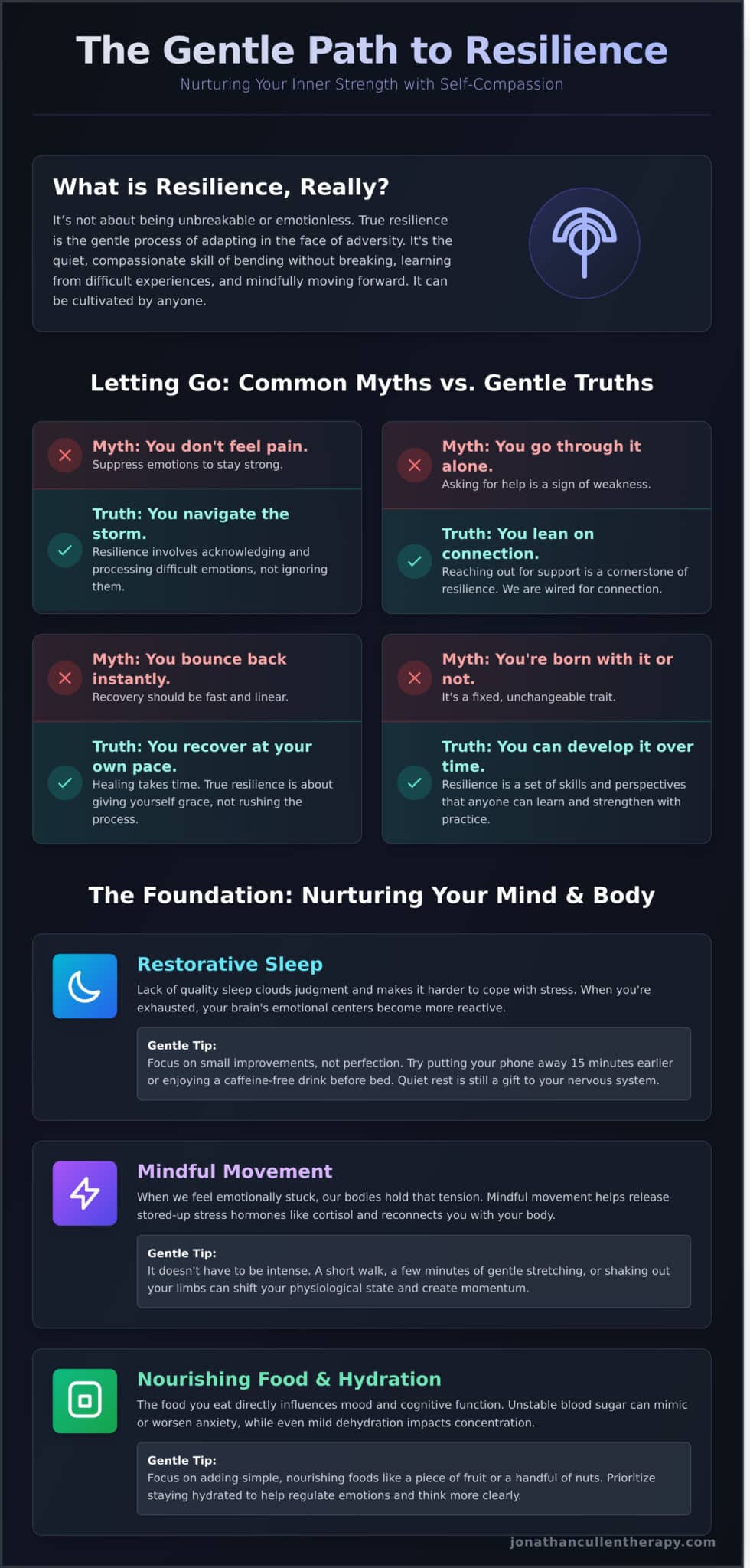
When we hear the word ‘resilience’, it’s easy to picture an unshakeable person who feels no pain. But in truth, it is something far more human and compassionate. It’s not about being tough or emotionless; it’s the gentle process of adapting well in the face of adversity, trauma, or significant stress. It’s about bending without breaking.
At its core, Psychological resilience is not about avoiding hardship, but about navigating through it. It’s the quiet strength that allows us to process difficult experiences, learn from them, and continue moving forward. Most importantly, it is not a fixed trait you are born with, but a skill that can be mindfully cultivated by anyone, at any stage of life.
Resilience as a Gentle Process
Building this inner capacity is a personal journey, not a destination. It involves learning and growing through your experiences, with natural ups and downs along the way. Your path to resilience will honour your unique story; it will look different from anyone else’s because it is shaped by your life. There is no single ‘right’ way to be resilient, only your way.
Common Myths About Resilience We Can Let Go Of
To truly embrace this skill, it helps to be clear on what it isn’t. Let’s gently set aside some common myths that can often hold us back:
- Myth 1: Resilient people don’t feel emotional pain. This couldn’t be further from the truth. Resilience involves feeling and acknowledging difficult emotions, not suppressing them. It’s about navigating the storm, not pretending it isn’t raining.
- Myth 2: You have to go through it all alone. Reaching out for support is a cornerstone of resilience, not a sign of weakness. We are wired for connection, and you don’t have to face difficult times by yourself.
- Myth 3: Resilience means you bounce back instantly. Healing and adapting take time. Some days will be harder than others. True resilience is about giving yourself the grace to recover at your own pace, not rushing the process.
- Myth 4: You’re either born with it or you’re not. This is perhaps the most limiting myth. Resilience is a set of skills and perspectives that we can all develop and strengthen over time with practice and compassionate support.
The Foundation: Nurturing Your Mind and Body
When you’re navigating difficult times, it’s easy to overlook the deep connection between your physical and emotional wellbeing. But our bodies and minds are not separate; when one is depleted, the other feels the strain. Think of your physical energy as the fuel for your emotional endurance. When the tank is empty, your capacity for resilience is significantly lower, making even small challenges feel overwhelming. The American Psychological Association’s guide on Building your resilience highlights wellness as a core pillar of this strength. It’s helpful to reframe these foundational practices not as chores, but as compassionate acts of kindness to yourself. If you’re feeling overwhelmed, the key is to start with small, manageable steps that honour where you are right now.
The Power of Restorative Sleep
A lack of quality sleep can shorten your fuse, cloud your judgement, and make it much harder to cope with stress. When you’re exhausted, your brain’s emotional centres are more reactive. Instead of aiming for perfection, focus on gentle improvements. This could be as simple as putting your phone away 15 minutes before bed or enjoying a warm, caffeine-free drink. Remember, even if deep sleep feels out of reach, quiet rest is still a valuable gift to your nervous system.
Mindful Movement for Stress Relief
When we feel emotionally stuck, our bodies often hold that tension. Mindful movement isn’t about intense exercise; it’s about gently re-connecting with your body and releasing stored-up stress hormones like cortisol. A short walk around the block, a few minutes of gentle stretching, or even just standing up and shaking out your limbs can shift your physiological state. This simple physical act helps to process tension and can create the momentum needed to feel less stuck in your thoughts and feelings.
How Nutrition Impacts Your Emotional State
The food we eat directly influences our mood and cognitive function. Unstable blood sugar levels, often caused by processed foods and sugary snacks, can mimic or worsen feelings of anxiety and irritability. You don’t need a restrictive diet; instead, focus on adding simple, nourishing foods. A piece of fruit, a handful of nuts, or a warm bowl of soup can offer stable energy. Staying hydrated is also crucial-even mild dehydration can impact your concentration and mood, making it harder to think clearly and regulate your emotions.
Building Strength Through Connection and Support
When navigating difficult times, there’s a common misconception that we must be stoic and self-reliant. However, true resilience is rarely built in isolation. Feeling genuinely seen, heard, and supported by others is a cornerstone of emotional strength. Connection validates our experiences and reminds us that we don’t have to face our challenges alone. As many studies on Building Resilience confirm, our social bonds are a powerful buffer against stress, making it crucial to focus on the quality of our connections, not just the quantity.
Identifying and Leaning on Your Support System
Take a moment to think about who in your life makes you feel safe and understood. This network is your foundation. It might include close friends, trusted family members, or even community groups centred around a shared hobby or faith. Don’t underestimate the role of pets, either; their unconditional companionship can provide immense comfort and reduce feelings of loneliness. The goal is to identify the people (and animals) who help you feel grounded and connected.
How to Gently Ask for Help
Reaching out can feel vulnerable, but it is an act of profound strength. It’s okay to be specific about what you need. Often, people want to help but don’t know how. Providing gentle guidance can make it easier for both of you. If you’re struggling to find the words, you could try one of these simple starting points:
- “I’m going through a tough time at the moment. Would you be free for a chat sometime this week? I could really use a listening ear.”
- “I’m feeling a bit overwhelmed. Could we just sit and have a cup of tea together? I don’t need to talk, just being with you would help.”
- “I’m finding it hard to focus on practical things. Would you be able to help me with [a specific, small task]?”
The Importance of Healthy Boundaries
Building a supportive network also involves protecting your own energy. Healthy boundaries are not about pushing people away; they are about creating sustainable and mutually respectful relationships. Learning to say ‘no’ to requests that drain you is essential for preventing burnout and preserving the emotional resources you need. Boundaries ensure your connections remain a source of support, not another source of stress. Therapy can be a safe space to explore your connections and learn how to set boundaries that honour your needs.
Cultivating a Resilient Mindset: Practical Mental Tools
When we’re facing challenges, our minds can often feel like our own worst enemy. The thoughts and stories we tell ourselves have a profound impact on our emotional experience. The good news is that we can learn to relate to our thoughts differently. This isn’t about forcing positivity or ignoring pain. It’s about cultivating mental flexibility-a core component of resilience. These are gentle, non-judgmental practices you can explore to soften the sharp edges of difficult emotions over time.
Practicing Mindfulness to Stay Grounded
Mindfulness is simply the practice of paying attention to the present moment with gentle awareness. When your thoughts are spiralling, it helps anchor you. This simple act calms your nervous system, creating a vital pause between a stressful event and your reaction to it.
You can try this for just one minute:
- Sit comfortably and close your eyes if you wish.
- Notice the feeling of your breath moving in and out of your body.
- When your mind wanders (which it will), gently guide your attention back to your breath.
Gently Challenging Negative Thought Patterns
Our thoughts often feel like undeniable facts, especially when we’re stressed. A key skill is learning to notice them without automatically accepting them as true. When a harsh thought arises, you can gently get curious about it. You might ask yourself:
- Is this thought 100% true, without a doubt?
- Is there another, more balanced or compassionate way to view this situation?
The goal isn’t to start an argument with yourself, but to create a little space and introduce a kinder perspective.
The Healing Power of Self-Compassion
Self-compassion means treating yourself with the same kindness and understanding you would offer a dear friend who is struggling. So often, we respond to our own pain with harsh self-criticism, which only depletes our energy and undermines our ability to build resilience. Instead, try acknowledging your struggle with a simple, validating phrase. Placing a hand on your heart and saying to yourself, “This is a difficult moment,” can be incredibly powerful. It honours your experience without getting lost in it.
Exploring these tools with a supportive therapist can deepen their impact. You can learn more about a down-to-earth approach to building these skills.
When to Seek Professional Support on Your Journey
Building resilience is a deeply personal journey, but it’s not one you have to walk alone. While the strategies in this article offer a strong foundation, there are times when the weight of our experiences calls for a more dedicated and supportive space. Reaching out for professional help isn’t a sign of failure; it’s a courageous and proactive step toward healing and growth.
Therapy is not just for moments of crisis. It is a powerful, confidential space where you can explore your thoughts and feelings without judgment, guided by a compassionate professional. Think of a therapist as a guide who can help you navigate your inner world, offering tools and perspectives that empower you to move forward with greater strength.
Signs It Might Be Time to Talk to Someone
Sometimes the signs are subtle, while at other times they are overwhelming. If you recognise any of the following in your own experience, it may be a good time to consider professional support:
- Feeling stuck or overwhelmed: You’ve been feeling this way for a prolonged period, and it’s beginning to impact your daily life, work, or relationships.
- Coping strategies feel ineffective: The methods you once relied on to get through tough times no longer seem to be working for you.
- The past is impacting the present: Past difficulties or trauma are resurfacing, affecting your current mood, confidence, and ability to feel safe.
- A desire for a dedicated space: You simply want a confidential, non-judgmental environment to explore your experiences and understand yourself better.
How Therapy Specifically Helps Build Resilience
A therapeutic relationship is a unique partnership designed to foster your inner strength. In a supportive environment, you can actively cultivate your resilience by:
- Learning personalised coping skills: A therapist can help you develop practical, down-to-earth strategies tailored to your unique challenges and personality.
- Processing past events: Together, we can work through difficult memories that may be undermining your confidence, helping you to integrate them in a way that no longer holds you back.
- Developing self-awareness: By exploring your emotional patterns and reactions, you gain a deeper understanding of yourself, which is the foundation of lasting change.
- Building a secure relationship: The trust and safety built with a therapist can be a powerful, healing experience in itself, providing a secure base from which to grow.
Taking that first step can feel daunting, but it is an investment in your well-being. If you feel ready to explore how a compassionate, supportive space could help you on your journey, you can learn more about my approach to therapy and how we can work together.
Your Path Forward: Nurturing Your Inner Strength
Building true resilience is not about avoiding hardship, but learning to navigate life’s challenges with greater strength and self-compassion. As we’ve explored, this is a gentle, ongoing process. It begins with the foundational practices of nurturing your mind and body, leaning on your connections for support, and patiently cultivating a more compassionate inner voice. These are not quick fixes, but the cornerstones of a more grounded and fulfilling way of being.
Remember, this path is yours, but you don’t have to walk it alone. If you feel that professional guidance could make your journey less overwhelming, I am here to help. I offer a warm, non-judgmental space where your story is honoured. As a neurodivergent-affirming therapist using an integrative psychotherapy approach, I can support you in finding your way forward.
You don’t have to face it alone. Learn more about how therapy can support you.
Frequently Asked Questions About Resilience
Can resilience really be learned, or are you just born with it?
While some people may seem naturally more equipped to handle stress, resilience is not a fixed trait you’re born with. It is a dynamic set of skills and perspectives that anyone can learn and strengthen over time. Think of it less like a personality trait and more like a muscle. Through conscious effort, self-compassion, and learning new coping strategies, you can actively build your capacity to navigate life’s challenges in a more grounded and connected way.
How long does it take to build resilience?
Building resilience is a personal journey, not a race with a finish line. There is no set timeline, as everyone’s circumstances and starting points are unique. The focus should be on small, consistent steps rather than a dramatic overnight change. You might notice small shifts in your thinking or reactions within a few weeks of practice, but the process of strengthening your resilience is ongoing. It’s about gently integrating new habits into your life at a pace that feels right for you.
What’s the difference between resilience and just ‘toughing it out’ or suppressing emotions?
This is a crucial distinction. ‘Toughing it out’ often involves suppressing or ignoring difficult emotions, which can lead to burnout and isolation. True resilience is the opposite; it’s about having the capacity to sit with discomfort, process your feelings in a healthy way, and learn from the experience. It involves self-compassion and reaching out for support, not pretending you’re unaffected. It’s about being flexible and adaptable, not rigid and unfeeling.
I feel too exhausted to try any of these things. What is the absolute first step?
Feeling overwhelmed and exhausted is completely understandable, and it’s okay if big changes feel impossible right now. The absolute first step is the smallest, kindest thing you can do for yourself. This might simply be pausing to take three slow, deep breaths. It could be drinking a glass of water or stepping outside for just one minute. The goal isn’t to solve everything at once, but to offer yourself a single, brief moment of care and grounding. That is the beginning.
Can building resilience help with diagnosed conditions like anxiety or depression?
Yes, absolutely. While it is not a substitute for professional treatment from a GP or therapist, it is a powerful and supportive component of managing conditions like anxiety and depression. Developing resilience can help you better regulate your emotional responses, cope with triggers, and navigate the daily challenges these conditions present. It equips you with practical tools that support your overall mental health journey, working alongside therapy and other recommended treatments to help you feel more grounded.
Is it a sign of weakness if I need therapy to become more resilient?
Absolutely not. Reaching out for support from a therapist is a profound sign of strength, self-awareness, and courage. It shows you are committed to your well-being and willing to invest in yourself. Just as you might work with a trainer to build physical strength, therapy provides a supportive, non-judgmental space to build emotional resilience with expert guidance. It’s a proactive step towards creating a more fulfilling life, and you don’t have to do it alone.