
Is your daily life a constant juggle with a to-do list that never shrinks, a mind that races with a thousand thoughts, and a feeling of being perpetually overwhelmed? If you’re an adult with ADHD, this sense of chaos can feel exhausting. You may have spent a lifetime feeling ‘different,’ and the search for effective support can be just as daunting. But finding compassionate adhd therapy for adults isn’t about ‘fixing’ you; it’s about understanding you.
This guide is here to offer a supportive, non-judgmental look at how therapy tailored for the ADHD brain can help. We will explore how you can move from feeling overwhelmed to feeling capable and in control of your life. Together, we’ll uncover practical strategies to manage your days, learn to regulate your emotions, and build the confidence and self-compassion you deserve. You don’t have to navigate this journey alone; there is a path toward a more grounded, fulfilling life.
Key Takeaways
- Learn why adult ADHD often feels like an internal struggle and how understanding this is the first step toward feeling more in control.
- Discover how therapy isn’t about “fixing” you, but about building a personalised toolkit of strategies that work with your unique brain.
- Effective adhd therapy for adults involves finding the right approach for you; explore the common therapeutic models that can help manage symptoms.
- Understand the crucial difference an “ADHD-informed” therapist can make and what to look for to ensure you feel truly seen and supported.
Beyond the Label: What ADHD Truly Feels Like for Adults
If you’re an adult with ADHD, you know it’s so much more than a simple struggle with focus. It’s the feeling of a constant inner battle, a mind that never seems to quieten down. Many describe it as having a race car for a brain but with bicycle brakes-a powerful engine of ideas and energy that’s incredibly difficult to control. The daily effort of masking these symptoms to appear ‘normal’ is profoundly exhausting, and over time, this struggle can take a deep toll on your self-worth, career, and relationships.
Living this way is tough, but recognising your experience is the first step. You don’t have to face it alone.
The Executive Functioning Challenge
At the heart of this is a struggle with executive functions-the mental skills that help you manage daily life. This isn’t laziness; it’s a genuine difficulty with initiating tasks, seeing them through, and organising your time. You might experience ‘time blindness,’ where hours feel like minutes. The gap between knowing what you need to do and being unable to start is deeply frustrating. For many, Understanding ADHD and its core impact on these skills is the first step toward clarity.
The Emotional Rollercoaster
Living with ADHD often means navigating intense emotional highs and lows that can feel overwhelming. Many adults with ADHD experience what is known as Rejection Sensitive Dysphoria (RSD)-an extreme emotional pain in response to perceived criticism or rejection. This sensitivity can fuel a difficult cycle of perceived failure, followed by intense shame and harsh self-criticism, making it incredibly difficult to feel secure in yourself and your relationships.
These combined challenges can leave you feeling isolated and misunderstood. Recognising that these patterns are not a reflection of your character but symptoms of a neurotype is a powerful act of self-compassion. Supportive ADHD therapy for adults provides a non-judgmental space to untangle these experiences, build practical strategies, and rediscover your inherent strengths.
How Therapy Helps: Building Your Personalised ADHD Toolkit
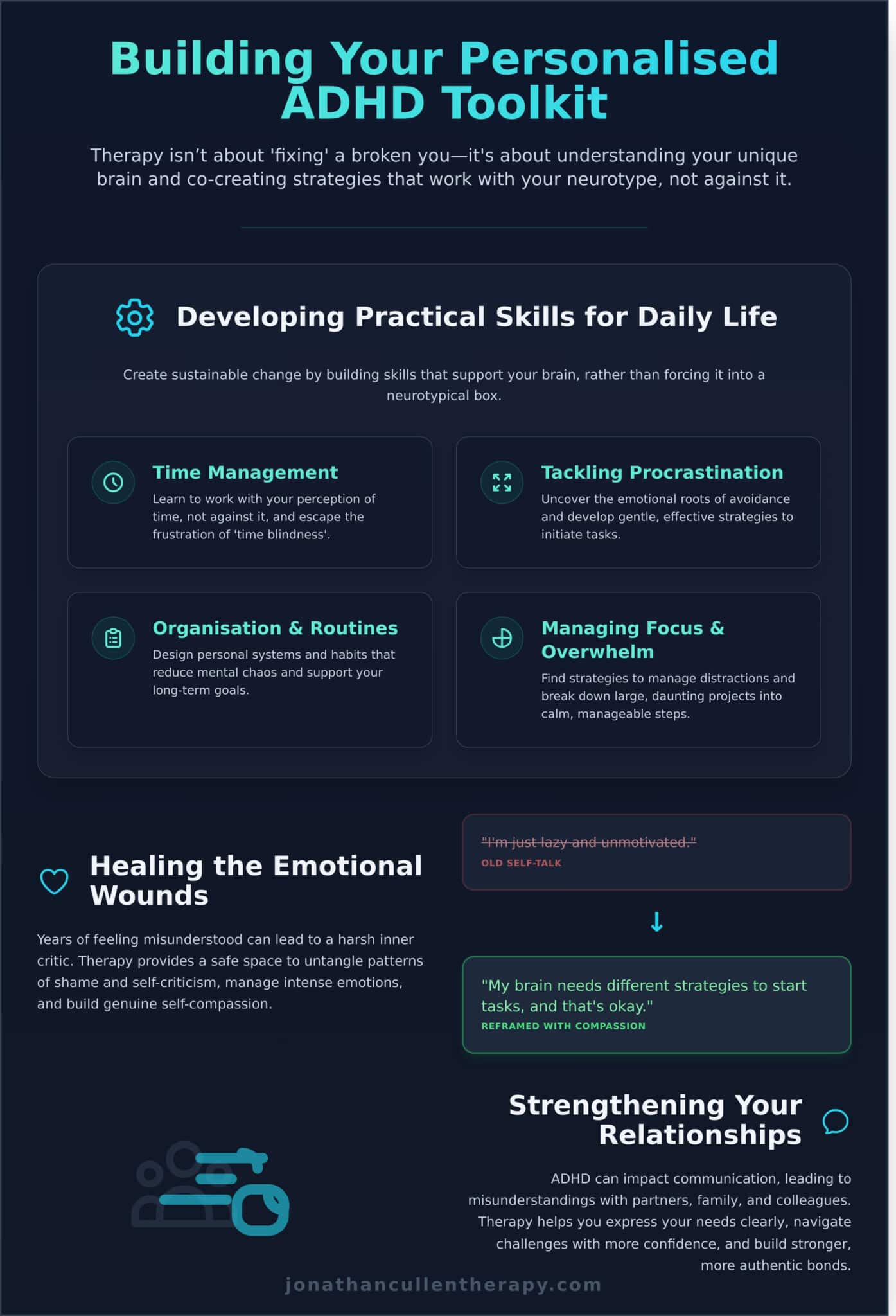
Effective adhd therapy for adults isn’t about ‘fixing’ you, because you are not broken. Instead, it’s a supportive, collaborative space where we work together to understand your unique neurodivergent brain. It’s about moving beyond generic, one-size-fits-all advice and building a personalised toolkit-one filled with strategies that honour how you think, feel, and experience the world. This journey is a partnership focused on both practical skills and deep emotional healing.
Developing Practical Skills for Daily Life
So much of the frustration with ADHD comes from the daily struggle to keep up in a world not always built for you. In our sessions, we focus on creating sustainable change, not forcing you into a neurotypical box. Together, we can explore various evidence-based psychotherapy approaches to build skills that support your brain, including:
- Time Management: Learning to work with your perception of time, not against it.
- Procrastination: Understanding the emotional roots of avoidance and developing gentle ways to get started.
- Organisation & Routines: Designing systems and habits that reduce chaos and support your goals.
- Focus & Overwhelm: Finding strategies to manage distractions and break down large tasks into calm, manageable steps.
Healing the Emotional Wounds
Living with undiagnosed or misunderstood ADHD can leave deep emotional marks. Years of being told you’re ‘lazy,’ ‘too sensitive,’ or ‘not trying hard enough’ often lead to a harsh inner critic and feelings of shame. Therapy provides a safe, non-judgmental space to heal these wounds. We can work compassionately to address the emotional side of ADHD by learning to reframe negative self-talk, manage intense emotional responses with greater ease, and build genuine self-compassion for your struggles.
Strengthening Your Relationships
ADHD can impact how you communicate and connect with others, often leading to misunderstandings with partners, family, and colleagues. We can explore these dynamics, helping you to express your needs more clearly and listen in a way that feels more grounded and connected. By understanding how your ADHD shows up in your relationships, you can navigate challenges with more confidence and build stronger, more authentic bonds. You don’t have to face it alone. Let’s talk.
Finding the Right Approach: Common Types of Therapy for Adult ADHD
Stepping into therapy can feel daunting, especially when you’re not sure what to expect. It’s helpful to know that there isn’t a single “best” type of therapy for ADHD. Instead, different approaches offer different tools, and the goal is to find what feels right for you. Many therapists, myself included, use an integrative or blended approach, tailoring the sessions to honour your unique story and needs. Comprehensive guidance on ADHD diagnosis and treatment often highlights therapy as a key component for building practical skills alongside any medical support.
Let’s explore a few common and effective models used in adhd therapy for adults, focusing on the problems they help solve.
Cognitive Behavioural Therapy (CBT) for ADHD
If you find yourself caught in cycles of negative self-talk (“I always mess things up”) or procrastination, CBT can offer a practical way forward. This approach helps you identify the unhelpful thoughts that drive feelings of shame and inaction. Together, we can gently challenge those thoughts and develop supportive coping strategies and organisational systems that work with your ADHD brain, not against it.
Mindfulness and Acceptance-Based Approaches
The ADHD mind is often described as a “busy brain,” jumping from one thought to the next. Mindfulness-based therapy provides a calm, non-judgmental space to simply notice your thoughts and feelings without getting carried away by them. By learning to ground yourself in the present moment, you can improve your focus, reduce emotional reactivity, and feel less overwhelmed by stress.
Psychodynamic and Relational Therapy
Sometimes, the challenges of adult ADHD are deeply connected to past experiences. You may have spent years feeling misunderstood or internalising messages that you weren’t good enough. This approach allows us to explore how your history has shaped your self-perception. In the safety of the therapeutic relationship, we can begin to understand the roots of anxiety and shame, helping you to build self-compassion and trust.
What to Expect in Your Sessions: A Journey of Collaboration
Taking that first step towards therapy can feel like the biggest hurdle, especially when you’ve spent a lifetime trying to manage things on your own. I want to reassure you that the therapy room is a confidential, non-judgmental space designed for you to feel safe, seen, and understood. It’s a place where you can finally take off the mask and be your authentic self, without fear of criticism. This journey is built on collaboration, where your unique story is honoured and placed at the very centre of our work. Remember, progress isn’t a straight line; it’s a process of learning and growing, with moments of insight and periods of challenge. The goal is steady, compassionate growth over time.
Your First Few Sessions: Building a Foundation
Our initial meetings are all about building a warm, trusting relationship. This connection is the bedrock of effective adhd therapy for adults. There’s no pressure to have everything figured out. We will simply start by getting to know one another. At your own pace, you can share your history, your current frustrations, and what you hope might be different in your life. Together, we will collaboratively define what success looks like for you, setting meaningful goals that resonate with your personal values-whether that’s feeling less overwhelmed by daily tasks, improving relationships, or simply understanding yourself better.
An Ongoing Therapeutic Conversation
As our work deepens, each session becomes part of a continuous, supportive conversation. We’ll make space to explore recent challenges you’ve faced and, just as importantly, to celebrate your successes and wins. This is your dedicated time to practice new skills-like emotional regulation strategies or new ways of communicating-in a safe environment before you take them out into the world. You’ll gain profound insights into your patterns of thinking and behaving, and I will gently challenge perspectives that may be holding you back. This is not about being “fixed,” but about becoming more connected to yourself and empowered to navigate your life with greater confidence and compassion.
This down-to-earth, collaborative process honours your unique experience. If you feel ready to start this journey, you can learn more about my approach to therapy and how we can work together.
Finding the Right ADHD Therapist for You
Beginning therapy is a significant step, and finding the right person to guide you is perhaps the most crucial part of the journey. While qualifications and experience are important, the success of adhd therapy for adults often comes down to one thing: the quality of the connection you have with your therapist. You deserve to feel understood, supported, and safe, not judged or dismissed.
It’s perfectly okay to ‘shop around’ and speak to a few different therapists before you decide. A good therapist will welcome this. The goal is to find someone who not only has the right expertise but also feels like the right fit for you. You are looking for a partner in this process, someone who honours your unique story and makes you feel truly seen.
What Does ‘ADHD-Informed’ Mean?
An ADHD-informed therapist goes beyond the textbook. They understand that ADHD is a neurological difference, not a character flaw or a lack of willpower. This means they won’t offer generic, unhelpful advice like “just try harder” or “use a planner,” because they know these approaches often fail ADHD brains. Instead, they have a deeper understanding of the specific challenges involved.
- They see ADHD as a unique way of processing the world.
- They have specific training or experience in helping with executive function challenges like emotional regulation, task initiation, and time management.
- They collaborate with you to find strategies that work with your brain, not against it.
The Value of Lived Experience
For many, working with a neurodivergent therapist can create a powerful sense of safety and validation. A therapist who also has ADHD understands the internal experience-the racing thoughts, the Rejection Sensitive Dysphoria (RSD), the frustration of knowing what you need to do but being unable to start. This shared understanding can foster a unique level of empathy and connection, helping you feel less alone in your struggles. If this resonates with you, you can learn more about my down-to-earth approach to therapy.
Your Journey Forward: Taking the Next Step
Navigating life with ADHD doesn’t have to feel like a constant struggle. As we’ve explored, understanding your unique experience is the first step, and therapy provides the personalised toolkit to build on your strengths. The right therapeutic relationship creates a space not to “fix” you, but to empower you with strategies that align with how your brain works. This collaborative journey is central to effective adhd therapy for adults, helping you move from feeling overwhelmed to feeling capable and grounded.
You don’t have to face this alone. I offer a warm, supportive, and non-judgmental space for this exploration. As a neurodivergent therapist with lived experience of ADHD, my approach to integrative psychotherapy honours your unique story and provides compassionate, down-to-earth support.
Ready to move from overwhelmed to empowered? Book a consultation today.
Taking this step is a powerful act of self-compassion, opening the door to a more connected and fulfilling life.
Frequently Asked Questions
Does therapy for ADHD work without medication?
Yes, absolutely. Therapy can be a powerful and effective standalone approach. It provides a supportive space to develop practical strategies for managing executive function challenges like organisation and focus. We also explore the emotional side of ADHD, such as building self-esteem and navigating relationship difficulties. For many, this is enough, while others find that therapy works well alongside medication. The choice is always a personal one that we can discuss together in a non-judgmental way.
How long does therapy for adult ADHD usually take?
The journey of therapy is unique to each person, so there isn’t a set timeline. Some individuals find that a shorter-term focus of 12-20 sessions is perfect for learning specific skills and strategies. Others benefit from longer-term, open-ended support to explore deeper patterns and build lasting self-compassion. Together, we will regularly check in on your progress and goals to ensure the pace feels right for you and honours your unique story.
What’s the difference between an ADHD coach and an ADHD therapist?
This is a great question, as their roles are different yet can be complementary. A therapist is a qualified mental health professional who helps you explore the emotional impact of ADHD, including co-occurring conditions like anxiety or trauma. An ADHD coach focuses primarily on practical, goal-oriented strategies for things like time management and organisation. While a coach helps with the ‘how-to’, a therapist provides a grounded space to understand the ‘why’ and the feelings behind your challenges.
Can therapy help if I only suspect I have ADHD but have no official diagnosis?
Yes, you don’t need an official diagnosis to benefit from therapy. If you’re feeling overwhelmed or recognise traits of ADHD in yourself, that is more than enough reason to seek support. In our sessions, we can explore your experiences in a compassionate space. This process can help you gain clarity and develop coping strategies for the challenges you’re facing, regardless of a label. It can be a vital first step on your journey to feeling more connected and in control.
Is online therapy as effective as in-person therapy for ADHD?
For many people, online adhd therapy for adults is just as effective as meeting in person. It offers great flexibility and allows you to attend sessions from a space where you feel most comfortable and safe. The most crucial element for success is the connection you feel with your therapist. A strong, trusting therapeutic relationship can be built just as effectively online. It truly comes down to your personal preference and what feels most supportive for you.
How do I know if the therapy is actually working?
Progress often reveals itself in small, meaningful ways. You might notice you are less critical of yourself when you make a mistake, or that you’re better able to pause before reacting in a stressful moment. It could be feeling more organised or simply feeling more understood and less alone. The key indicator is a growing sense of self-awareness and self-compassion. We will work together to identify these positive shifts as they happen.