
Living with the weight of a past event can leave you feeling disconnected, as if a part of you is stuck in time. You might be struggling with persistent anxiety, emotional numbness, or the unsettling feeling that you are somehow permanently damaged. Perhaps you even question if what you went through ‘counts’ as trauma. Your experience is valid, and you don’t have to carry this burden alone. Taking that first step towards healing can feel daunting, which is why understanding the process is so important. This is where a compassionate approach to trauma therapy can offer a safe and supportive path forward.
This gentle guide is here to meet you where you are. We will explore what trauma is and how it can affect your mind and body, helping you make sense of your reactions. Our promise is to demystify the therapeutic journey, showing you how it can help you learn to cope, reconnect with a sense of safety, and begin to feel whole again. Healing is possible, and this is your starting point for finding your way back to feeling grounded, in control, and like yourself.
Key Takeaways
- Learn to recognise trauma not as a personal failing, but as a natural response to an overwhelming event that has shaped how you feel and react.
- Discover how past trauma can keep your nervous system in a constant state of ‘high alert,’ impacting everything from your sleep to your relationships.
- Explore how specialised trauma therapy offers a safe, supportive space to process difficult memories, helping you regain a sense of control and safety.
- Find out why there’s no ‘one-size-fits-all’ approach to healing and how to identify the therapeutic style that feels right for your unique journey.
What is Trauma? Understanding Its Shape in Your Life
If you’re exploring what it means to heal, it’s helpful to start with a gentle understanding of what trauma is. Often, we think of it as a specific, dramatic event. While that can be true, it’s more about your internal response. At its core, psychological trauma is the emotional and physical reaction to a deeply distressing or disturbing experience that overwhelms your ability to cope, leaving you feeling helpless. It’s not the event that defines trauma, but how your nervous system processes it. Your experience is valid, no matter how it compares to anyone else’s.
Beyond a Single Event: The Different Types of Trauma
Trauma isn’t one-size-fits-all; it can take many forms. Recognising its shape in your life is a compassionate step toward understanding your needs. The main types include:
- Acute Trauma: This results from a single, distressing incident, such as a car accident, a physical assault, or the sudden death of a loved one.
- Chronic Trauma: This happens when you are exposed to harmful events repeatedly over a long period, like ongoing domestic abuse, bullying, or long-term illness.
- Complex Trauma (C-PTSD): This often stems from exposure to varied and multiple traumatic events, particularly in childhood, from which there was no easy escape.
Big ‘T’ and Little ‘t’ Trauma: Honouring Your Unique Story
To further honour your unique story, it can be useful to think about trauma in terms of its scale. Big ‘T’ traumas are the life-threatening events we often associate with PTSD, such as combat, natural disasters, or severe violence. Little ‘t’ traumas are personally distressing events that still exceed our capacity to cope. These can include divorce, emotional neglect, or the loss of a pet. Both are significant, and both can have a lasting impact on your wellbeing. The label doesn’t matter as much as the effect it has on you.
Understanding these distinctions isn’t about categorising your pain, but about validating it. Recognising the source and nature of your distress is an empowering first step on your healing journey. It helps clarify why you feel the way you do and can guide you toward the right kind of supportive trauma therapy. You don’t have to face it alone; help is available.
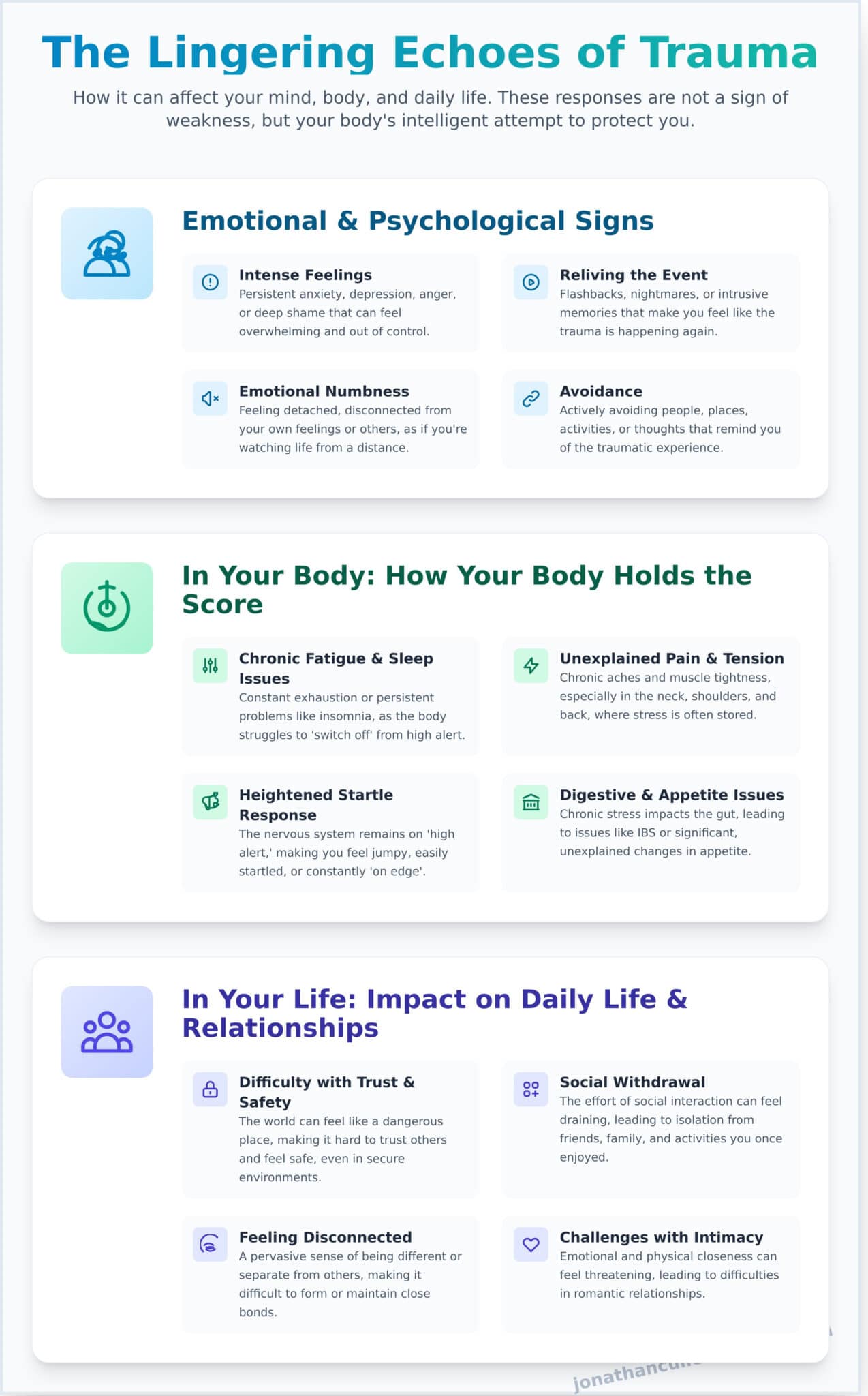
How Trauma Can Affect Your Mind, Body, and Relationships
Trauma is more than just a difficult memory; it’s an experience that can fundamentally change how your brain and nervous system respond to the world. When you go through something overwhelming, your body’s natural survival system-often called ‘fight, flight, or freeze’-can get stuck in the ‘on’ position. It can leave you feeling constantly on alert, as if danger is always just around the corner.
It’s essential to know that these responses are not a sign of weakness. They are your body’s intelligent, powerful attempt to protect you from further harm. Recognising how trauma shows up in your life is the first, most compassionate step you can take toward healing. Understanding these signs can be a journey in itself, and resources from organisations like the American Psychological Association on trauma can provide further context. The goal is not to judge these responses, but to gently understand them.
Emotional and Psychological Signs of Unresolved Trauma
On an emotional level, the echoes of trauma can be disruptive and confusing. You might find yourself grappling with feelings that seem overwhelming or out of your control. Common signs include:
- Intense and persistent feelings of anxiety, depression, anger, or deep shame.
- Flashbacks, nightmares, or intrusive memories that make you feel like you are reliving the event.
- Feeling emotionally numb, detached, or disconnected from your own feelings and from others.
- Actively avoiding people, places, activities, or thoughts that remind you of the traumatic experience.
Physical Symptoms: How Your Body Holds the Score
Your body holds onto the tension and fear of traumatic events long after they are over. This stored stress can manifest in physical ways that may not seem connected at first. This is where gentle and effective trauma therapy can be so supportive. Physical symptoms often include:
- Chronic fatigue, exhaustion, or persistent sleep problems like insomnia.
- Unexplained aches, chronic pain, or persistent muscle tension, especially in the neck, shoulders, and back.
- A heightened startle response, making you feel jumpy or constantly ‘on edge’.
- Digestive issues, such as irritable bowel syndrome (IBS), or significant changes in your appetite.
Impact on Daily Life and Relationships
The internal turmoil caused by trauma naturally spills over into your external world, affecting how you connect with others and navigate daily tasks. It can make the world feel unsafe and unpredictable, leading to:
- Difficulty trusting others, which can make it hard to form or maintain close, supportive relationships.
- Challenges with concentration, memory, and making decisions.
- A feeling that your future is limited or a loss of your sense of purpose and hope.
What is Trauma Therapy and How Does It Offer a Path to Healing?
Thinking about therapy when you’re already feeling overwhelmed can be daunting. It’s natural to wonder what it involves and if it can truly help. Put simply, trauma therapy is a specialised and collaborative journey designed to help you gently address the lingering effects of difficult experiences. The primary goal is to process these events in a safe, contained way, so they no longer have such a powerful hold over your daily life.
It’s not about erasing memories, but about reducing their emotional charge. The American Psychological Association on trauma highlights that recovery is possible, and a key part of this is finding professional support. The therapeutic relationship itself-one built on trust and compassion-is often the most powerful agent of change.
Creating a Foundation of Safety and Trust
Before any deep work can begin, the first and most important priority is to establish a feeling of safety. In our sessions, you are always in control of the pace and what you choose to share. My role is to provide a warm, non-judgmental, and supportive space where your unique story is honoured. This foundation allows you to explore your experiences without fear of judgment, creating the stability needed for true healing to begin.
Processing Memories, Not Just Reliving Them
A common fear is that therapy will force you to relive your trauma. Effective therapy does the opposite; it helps you process these memories, not just get stuck in them. We work together to build your internal resources and coping skills first, so you feel grounded and capable. This approach helps your brain to understand that the danger is over, allowing memories to be integrated into your life story as something that happened in the past, rather than something that is still happening now.
Reconnecting With Yourself and Finding a New ‘Normal’
Healing from trauma is also about reclaiming your life and rediscovering who you are. Therapy can help you learn to regulate your emotions and calm your nervous system when you feel overwhelmed. It’s a process of rebuilding a sense of self-worth and empowerment, moving from a place of survival to one of thriving. Together, we can work towards developing a new sense of meaning and purpose, helping you build a fulfilling life that feels truly your own. You don’t have to face this alone. Learn more about my approach.
Common Approaches in Trauma Therapy: Finding the Right Fit for You
Exploring the world of therapy can feel overwhelming, especially when you’re already feeling vulnerable. It’s important to remember that there is no single ‘best’ type of trauma therapy; the most effective approach is the one that feels right and safe for you. Many therapists, myself included, use an integrative approach, thoughtfully combining different techniques to create a supportive plan that honours your unique story.
The goal of this overview is simply to demystify some common methods, not to present you with a difficult choice. Think of it as a gentle introduction to a few of the pathways to healing.
Therapies Focusing on Thoughts and Behaviours
Approaches like Trauma-Focused Cognitive Behavioural Therapy (TF-CBT) work on the connection between our thoughts, feelings, and actions. This down-to-earth method helps you to:
- Identify and gently challenge unhelpful thinking patterns that may have developed after a traumatic experience.
- Gradually and safely re-engage with people, places, or activities you may have been avoiding.
- Learn practical coping and relaxation skills to help you feel more grounded and in control.
Therapies Focusing on the Body
Sometimes, trauma feels less like a memory and more like a physical state-a tension in your shoulders, a knot in your stomach. Somatic therapies are based on the understanding that trauma can get ‘stuck’ in the body. This approach focuses on helping you to gently release this trapped physical stress and restore a sense of balance, often without needing to go into deep verbal detail about the event itself.
Therapies Focusing on Memory Reprocessing
Modalities like Eye Movement Desensitisation and Reprocessing (EMDR) are designed specifically to help the brain process distressing memories. Using bilateral stimulation (such as guided eye movements), EMDR helps your brain to ‘digest’ and store the memory properly. The goal is not to erase what happened, but to significantly reduce the vividness and emotional charge, allowing you to remember the past without being overwhelmed by it.
Finding the right therapeutic relationship is the most important part of this journey. If you’re curious to learn more about how a compassionate, integrative approach to trauma therapy could support you, please feel free to get in touch. You don’t have to figure this out alone.
Your First Steps: How to Begin Your Healing Journey
Taking the first step towards healing can often feel the most daunting, but it is also a profound act of strength. It’s a quiet declaration that you are ready to reclaim your life and your story, and you don’t have to walk this path alone. Recognising your need for support is a testament to your resilience.
What to Look For in a Trauma Therapist
Finding the right person to support you is a deeply personal decision. When you are searching, it’s important to trust your intuition and look for someone who feels like a good fit. Key things to consider include:
- Specialisation: Look for a professional who is ‘trauma-informed’ or specialises in working with trauma. This ensures they have the specific understanding needed to support you safely and effectively.
- A Safe Space: A good therapist will create a warm, non-judgmental, and collaborative environment. This is your space to feel seen and heard without fear of criticism.
- The Connection: Most importantly, you should feel comfortable and safe with them. The therapeutic relationship is the foundation of effective trauma therapy, so a sense of trust is vital.
What to Expect in Your First Few Sessions
Your first few sessions are not about diving into the most difficult memories. The initial focus is on building a safe and trusting relationship. We will gently explore what brought you to therapy, what your hopes are, and what you need to feel supported. This is also your opportunity to ask questions and decide if it feels right for you. You are in control, and you will never be pushed to share anything before you are ready.
The Pace of Healing: It’s Okay to Go Slow
It’s vital to remember that healing is a journey, not a race. It is not a linear process; there will be moments of progress and times when you might feel stuck. That is completely normal and okay. A compassionate therapist honours your unique pace and respects your boundaries every step of the way. Every small step forward, no matter how minor it seems, is a victory worth acknowledging. If you feel ready to take the next step, I invite you to get in touch.
Your Path Forward: Embracing Healing and Hope
Navigating the path away from trauma begins with understanding its shape in your life. As we’ve explored, its effects can deeply impact your mind, body, and relationships, but they do not have to define your future. Healing is a courageous journey, and effective trauma therapy provides a safe, structured space to process your experiences and rediscover your inner strength. You have already taken an important step just by seeking this knowledge.
You don’t have to face it alone. I provide a warm, compassionate, and non-judgmental environment, offering specialised support for individuals navigating the complexities of trauma, anxiety, and ADHD. My approach to integrative psychotherapy is designed to honour your unique story, helping you feel more grounded and connected to yourself and the world around you.
If you’re looking for a supportive space to heal, I invite you to schedule a consultation. Taking this next step is an act of hope, and a more peaceful future is within your reach.
Frequently Asked Questions About Trauma Therapy
Do I have to talk about the details of my trauma in therapy?
You are always in control of what you choose to share. Many people worry about this, but effective trauma therapy doesn’t always require you to recount every detail of what happened. Our focus is on healing the impact the experience had on you. We can work with the feelings and physical sensations in your body without you having to re-live the event. Your journey is honoured here, and we will always move at a pace that feels safe for you.
How long does trauma therapy usually take?
The journey of healing is deeply personal, so there isn’t a set timeline. For some, a few months of focused work can bring significant relief and new coping skills. For others, particularly with more complex experiences, longer-term support is more beneficial. Together, we will create a plan that honours your unique story and goals. The most important thing is not speed, but creating lasting, grounded change at a pace that feels right for you.
What is the difference between trauma therapy and regular talk therapy?
While traditional talk therapy is very helpful for many issues, specialised trauma therapy recognises that traumatic memories are stored not just in the mind, but also in the body and nervous system. It goes beyond just talking about an event. Instead, it uses specific approaches to help your nervous system process and release stored stress. This creates a deeper, more integrated form of healing that addresses both emotional and physical responses to past events.
Is online trauma therapy as effective as meeting in person?
This is a common and important question. Research and experience show that for many people, online therapy is just as effective as in-person sessions. The key to successful therapy is the supportive, trusting relationship you build with your therapist, and this connection can absolutely be created online. Many find comfort and safety in being in their own familiar space during sessions, which can make the process feel more accessible and less daunting.
How do I know if what I experienced was ‘bad enough’ for therapy?
There is no such thing as ‘bad enough’. If an experience, recent or long ago, continues to impact your well-being, relationships, or daily life, then it is valid and worthy of support. Trauma isn’t defined by the event itself, but by its lasting effect on you. You don’t have to face these feelings alone. Your story matters, and seeking help is a courageous step towards feeling more connected and grounded in your own life.
Can trauma therapy help with physical symptoms like chronic pain or fatigue?
Absolutely. Trauma can place the nervous system into a constant state of high alert, which can lead to very real physical symptoms like chronic pain, fatigue, digestive issues, and headaches. A key part of our work together is helping your body learn that the threat is over. By using techniques that help calm and regulate your nervous system, we can often reduce these physical symptoms, helping you to feel more comfortable and at ease in your own body.