
Living with ADHD can sometimes feel like you’re speaking a different language, especially when trying to explain your experience to others. If you’ve ever felt misunderstood in a therapy session, or simply overwhelmed by the endless directories and professional titles, please know you are not alone. The search for a truly effective ADHD therapist can feel like a monumental task, but finding someone who genuinely understands the neurodivergent brain is a crucial step towards feeling seen and supported.
This guide is here to offer a calm, clear path forward. We will walk you through what to look for in a therapist who specialises in ADHD, how they can provide practical strategies for executive function challenges, and how to begin your journey with confidence. Our goal is to help you move from feeling stuck and confused to feeling empowered and ready to connect with a professional in the UK who can offer the compassionate, non-judgmental support you deserve.
Key Takeaways
- Discover why a therapist who specialises in ADHD can offer more effective, understanding support than a general counsellor.
- Learn how therapy for ADHD goes beyond just talking, offering a blend of practical strategies and essential emotional support.
- Finding the right adhd therapist is about more than qualifications; learn the key qualities that create a truly supportive connection.
- Feel confident in your search by clarifying the different roles of a therapist, coach, and psychiatrist to find the right support for your needs.
Why a Specialist ADHD Therapist Matters More Than You Think
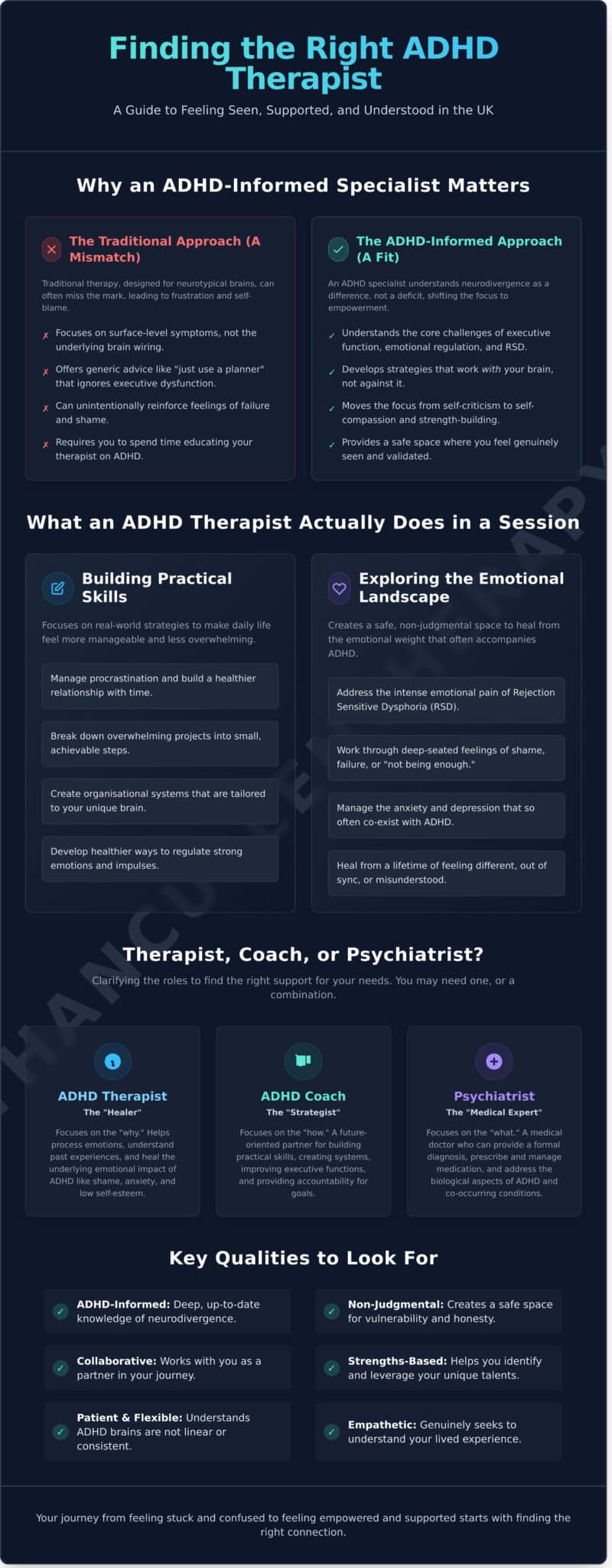
If you’re exploring therapy for ADHD, you might wonder if any good therapist will do. While any support is a positive step, understanding why a specialist matters can be the difference between feeling frustrated and feeling truly understood. ADHD is not simply a problem with focus; it’s a fundamental difference in brain wiring that impacts everything from emotional regulation and time perception to motivation and self-worth. The journey to managing it effectively begins with support that honours your unique story.
Working with a professional who has deep, specific knowledge of ADHD means you don’t have to spend your sessions educating them. Instead, you can dive straight into building strategies that work with your brain, not against it. A specialist can help you untangle the complex web of ADHD and its common companions, like anxiety or depression, providing clarity and a compassionate path forward. You don’t have to face it alone.
Beyond Traditional Talk Therapy
Many traditional therapy models are designed for neurotypical brains and can unintentionally fall short for someone with ADHD. You may have already experienced the frustration of being given advice like “just use a planner” or “try to focus harder,” only to feel like a failure when those strategies don’t stick. This is because they don’t address the core challenges of executive dysfunction. In a general therapy setting, these experiences can sometimes lead to feeling misunderstood, deepening a cycle of shame and self-blame.
The Power of an ‘ADHD-Informed’ Approach
Finding the right adhd therapist means finding someone who takes an ‘ADHD-informed’ approach. This isn’t just about knowing the symptoms; it’s about seeing neurodivergence as a difference, not a deficit. This perspective shifts the entire therapeutic process from “fixing what’s wrong” to understanding and harnessing how you operate. An informed therapist appreciates the full landscape of ADHD treatment options and helps you build a toolkit that is practical, sustainable, and tailored to you. The goal is to move from self-criticism to self-compassion, building confidence by focusing on your inherent strengths and finding creative ways to navigate your challenges.
What Does an ADHD Therapist Actually Do in a Session?
If you’re feeling overwhelmed by the daily challenges of ADHD, it’s natural to wonder what therapy can actually do. A session with an ADHD therapist is a confidential, supportive space designed entirely around you. It’s a unique blend of building practical, real-world strategies and providing deep emotional support. This isn’t about finding a “cure,” but about embarking on a collaborative journey to understand how ADHD impacts your unique life, identifying patterns, and developing personalised ways to feel more grounded and in control.
Together, we move beyond just managing symptoms. We work to gently untangle the underlying challenges to your self-esteem and confidence that may have built up over years. It’s a process that honours your story and empowers you to build a more fulfilling, connected life.
Building Practical Skills for Everyday Life
A significant part of our work is down-to-earth and focused on making your daily life feel more manageable. We’ll look at the hurdles that cause the most frustration and find compassionate, effective ways to navigate them. This often involves:
- Developing tailored strategies to manage procrastination and build a healthier relationship with time.
- Learning how to break down overwhelming projects into small, achievable steps that prevent shutdown.
- Creating organisational systems that work with your brain, not against it.
- Working on impulse control and developing healthier ways to regulate strong emotions as they arise.
Exploring the Emotional Landscape of ADHD
Living with ADHD is about more than just focus or organisation; it often carries a significant emotional weight. While clinical resources on Understanding ADHD are valuable, an experienced adhd therapist helps you process the deeply personal impact. We create a safe, non-judgmental space to gently explore these often-painful feelings, including:
- Addressing the intense emotional pain of Rejection Sensitive Dysphoria (RSD).
- Working through deep-seated feelings of shame, failure, or of never being ‘enough’.
- Managing the anxiety and depression that so often accompany an ADHD diagnosis.
- Healing from a lifetime of feeling different, out of sync, or misunderstood by others.
Ultimately, the goal is twofold: to give you the practical tools to navigate the world more easily, and the emotional space to heal and build a stronger sense of self. You don’t have to do this alone; therapy offers a path to not only manage ADHD but to truly understand and accept yourself.
Key Qualities to Look For in an ADHD Therapist
Finding the right person to support you on your journey is perhaps the most critical factor for successful therapy. Beyond qualifications, you are looking for a genuine connection-a partnership. The relationship with your adhd therapist should feel collaborative and supportive, not like you’re being given a list of instructions. A great therapist creates a warm, non-judgmental space where you feel safe enough to be your authentic self, challenges and all. It’s about finding a professional who not only understands the clinical side of ADHD but also honours your unique story and experience.
Essential Qualifications and Experience
Always check that a therapist is registered with a recognised professional body in the UK, such as the BACP (British Association for Counselling and Psychotherapy) or UKCP. This ensures they meet professional standards of practice and ethics. Don’t hesitate to ask about their specific experience working with adults with ADHD and what therapeutic approaches they use, whether it’s Cognitive Behavioural Therapy (CBT) for practical strategies, a psychodynamic approach to explore deeper patterns, or an integrative model that blends different techniques to suit you.
The Value of Lived Experience: The Neurodivergent Therapist
Some therapists have ADHD themselves, and this can offer a powerful and unique level of empathy. A neurodivergent therapist understands the internal experience of ADHD-the racing thoughts, the Rejection Sensitive Dysphoria, the executive function struggles-on a personal level, not just from a textbook. This shared understanding can foster a deeply validating connection, helping you feel truly seen and heard. They can also model how to successfully navigate a world that wasn’t built for the ADHD brain.
Red Flags to Watch Out For
Trust your instincts during your initial conversations. A good therapeutic relationship is built on respect and trust, so it’s important to watch out for signs that a therapist may not be the right fit for you. Be mindful of:
- Dismissing your experiences or suggesting your struggles are due to a lack of willpower.
- Offering a rigid, one-size-fits-all solution without taking the time to understand you.
- A tone that feels critical or judgmental, especially around common ADHD challenges like organisation or time management.
- A general lack of warmth, empathy, or genuine curiosity about who you are as a person.
Remember, you are looking for a supportive ally. You don’t have to face this alone, and the right adhd therapist will help you feel empowered, not diminished.
Therapist, Coach, or Psychiatrist: Clarifying Who Can Help
Navigating the world of ADHD support can feel overwhelming, with different titles and approaches. Understanding the distinct roles of a therapist, coach, and psychiatrist is a powerful first step in finding the support that honours your unique story. It’s important to remember that these roles are not mutually exclusive; many people find immense value in working with more than one professional on their journey.
Your needs will likely evolve over time, from seeking a diagnosis to building practical skills and exploring the emotional impact of ADHD. Clarifying who does what helps you get the right help at the right time.
The Role of an ADHD Therapist
An adhd therapist provides a compassionate, non-judgmental space to explore the emotional side of living with ADHD. The focus is on your mental well-being, helping you understand the ‘why’ behind your thoughts, feelings, and behaviours. Together, we can work through common co-occurring conditions like anxiety, trauma, or depression, process past experiences that may have impacted your self-esteem, and build a stronger, more grounded sense of self.
The Role of an ADHD Coach
An ADHD coach is your partner in practical, real-world action. Their approach is forward-focused, helping you build systems and strategies to manage daily life more effectively. A coach provides structure and accountability, working with you to set and achieve tangible goals related to:
- Organisation and planning
- Time management and prioritisation
- Productivity and task initiation
They help you with the ‘how’-how to start that project, manage your inbox, or create routines that stick.
The Role of a Psychiatrist
A psychiatrist is a medical doctor who specialises in mental health. In the UK, this is the professional you would see for a formal ADHD diagnosis and to explore medication options. They are qualified to prescribe and manage ADHD medication, monitoring its effectiveness and any side effects. Their role is centred on the biological and medical aspects of your treatment plan.
Choosing the right support depends entirely on your immediate needs. Are you looking to understand your emotional patterns, build practical life skills, or explore medical treatment? There is no single right answer, and your path is your own. Often, beginning the conversation with an experienced adhd therapist can provide the clarity needed to decide on your next steps. You don’t have to figure it all out alone.
Your First Steps: How to Find and Connect With a Therapist
Taking the first step towards therapy can often feel like the most challenging part of the journey. If you’re feeling overwhelmed by the process, please know that’s completely normal. Let’s break down how to find and connect with the right professional into simple, manageable actions, transforming uncertainty into a clear, hopeful path forward.
The goal is not just to find any therapist, but to find the right adhd therapist for you-someone who understands your unique story and with whom you feel a genuine connection. This connection is the foundation of effective therapy.
Preparing for Your Search
A little preparation can make your search feel much more focused and less daunting. Before you begin, take a few quiet moments to reflect on what you truly need. This clarity will act as your compass.
- Define your goals: Are you looking for practical strategies and skills to manage daily challenges? Or are you seeking a compassionate space to explore the emotional impact of ADHD? Perhaps it’s a blend of both.
- Consider logistics: Think about what works for your life. Do you prefer online sessions for convenience, or in-person appointments in London? What is your budget? (Therapy costs in London can vary, often ranging from £60-£150 per session).
- Jot down your story: Make a few brief notes about your key challenges, what you’ve tried before, and what you hope might be different this time.
Where to Look for ADHD Therapists
Once you have a clearer idea of your needs, you can begin exploring your options. There are several trusted resources available in the UK to help you find qualified professionals who specialise in adult ADHD.
- Professional Directories: Websites like Psychology Today and the BACP (British Association for Counselling and Psychotherapy) register allow you to filter therapists by specialism, location, and approach.
- ADHD Charities: Organisations such as ADHD UK often provide resources and lists of ADHD-aware practitioners.
- Therapist Websites: Reading a therapist’s personal website is an excellent way to get a feel for their personality and therapeutic style. Look for a down-to-earth approach that resonates with you.
Making the First Contact
Reaching out can feel intimidating, but remember, this is a no-pressure step. Most therapists offer a free initial phone or video call (often 15-20 minutes) for you to ask questions and see if it feels like a good fit. Prepare a few questions about their experience with ADHD and their approach to therapy.
During the conversation, pay attention to how you feel. Are you feeling heard? Understood? Is there a sense of warmth and safety? Trust your intuition-that feeling of connection is essential. Remember, you don’t have to face this alone. If my approach resonates with you, I invite you to book a free call.
Taking the Next Step with Confidence
Embarking on the path to find support is a significant first step. This guide has shown that the right connection is just as important as the right qualifications. Choosing a specialist adhd therapist who understands the unique challenges and strengths of a neurodivergent mind can be transformative, creating a foundation of trust and genuine understanding for your journey.
I know this process can feel overwhelming, but you don’t have to face it alone. As a neurodivergent therapist with my own lived experience of ADHD, I offer a warm, non-judgmental, and down-to-earth space where your story is truly heard. My work is dedicated to supporting adults with ADHD, anxiety, and relationship issues, helping them build a more connected and fulfilling life.
If you’re ready to feel understood, I invite you to book a free, no-obligation consultation. It’s a simple, pressure-free way to see if we’re a good fit. Remember, seeking support is a powerful act of self-compassion, and a calmer, clearer future is within your reach.
Frequently Asked Questions
What is the difference between an ADHD therapist and an ADHD coach?
This is a common question, and both roles offer valuable support. An ADHD coach typically focuses on the ‘how’-providing practical, forward-looking strategies for things like organisation, planning, and achieving specific goals. An ADHD therapist, on the other hand, helps you explore the ‘why’. Together, we can delve into the emotional impact of ADHD, address co-occurring challenges like anxiety, and work to heal past wounds in a supportive, non-judgmental space.
Can therapy help my ADHD if I don’t take medication?
Absolutely. While medication can be a helpful tool for many, it is not the only path. Therapy is a powerful way to build a personalised toolkit of strategies that work for your unique brain. We can explore techniques for emotional regulation, understand executive functioning challenges, and develop compassionate self-awareness. Therapy empowers you to navigate life with ADHD, whether you choose to take medication or not. You don’t have to face it alone.
How long does therapy for ADHD usually take?
The duration of therapy is a personal journey and there is no one-size-fits-all timeline. Some individuals find that a shorter-term focus of 12-20 sessions is enough to work on specific goals. Others benefit from longer-term, open-ended therapy to explore deeper patterns and build a lasting foundation of support. We will move at a pace that feels comfortable and right for you, regularly checking in on your progress and goals together.
Is online therapy as effective as in-person for ADHD?
For many people, yes. The core of effective therapy is the quality of the relationship and connection you build with your therapist, and this can be established just as strongly online. Online sessions can also remove barriers that may be particularly challenging with ADHD, such as travel time or sensory overwhelm. It offers a way to access consistent, compassionate support from the comfort of a space where you already feel grounded and safe.
What should I expect in my first therapy session for ADHD?
Your first session is a gentle, welcoming introduction. The main goal is for us to get to know one another and see if we feel like a good fit. We’ll talk about what brought you to therapy, your hopes for our work together, and any questions you might have for me. It’s a collaborative, down-to-earth conversation, not an assessment. It’s about creating a safe space where your unique story is honoured from the very beginning.
How do I know if ADHD therapy is working for me?
Progress often reveals itself in small but meaningful shifts. You might notice you’re feeling less overwhelmed by your to-do list, are navigating emotional moments with more confidence, or are simply being kinder to yourself. A good ADHD therapist will help you recognise these changes. The goal isn’t to ‘fix’ you, but to help you feel more capable, connected, and at ease in your own life. It’s about feeling more grounded, day by day.