
When the weight of depression feels heavy, the vibrant energy of London can seem distant and isolating. The thought of starting the search for a depression therapist in London might feel like another impossible task, adding to an already overwhelming sense of being stuck. Where do you even begin? How can you find someone you can trust with your story, and how do you navigate the worries about cost or whether therapy will truly help? It’s completely understandable to feel this way, but please know you don’t have to face this journey alone.
This gentle guide for 2026 was created to offer a calm, supportive hand. We will walk you through the process step-by-step, helping you understand how therapy works and what to look for in a professional. Our promise is to replace that feeling of confusion with a sense of clarity and hope. By the end of this article, you will feel more grounded and confident, equipped with a clear, manageable path to finding the right therapist for you and beginning your journey toward feeling better.
Key Takeaways
- Understand depression in simple, human terms, and learn how the right depression therapist in London can help you reframe it as a shared experience, not a personal weakness.
- Discover what really happens in a session with a depression therapist in London, and how it moves beyond just talking to help you build practical, lasting skills.
- Learn why the ‘best’ therapy is the one that fits you personally, and get an overview of the different approaches your depression therapist in London might use.
- Use our practical checklist to feel empowered and informed when choosing a depression therapist in London who is the right fit for you.
Understanding Depression: You Are Not Alone in This
If you are reading this, chances are you’re feeling overwhelmed, and the simple act of searching for help took a great deal of courage. Please know that you are not alone in this feeling. Many people experience depression, and taking this first step towards finding support is one of the most important and compassionate things you can do for yourself. It is a sign of strength, not weakness.
Depression is more than just feeling sad. It can feel like a heavy, persistent fog that colours every aspect of your life, draining your energy and making it difficult to connect with the world around you. It’s crucial to understand that this is not a personal failing. It is a recognised health condition, and with the right support, the fog can lift. For those interested in a more detailed overview, understanding depression from a clinical perspective can also be a helpful step in demystifying what you are going through.
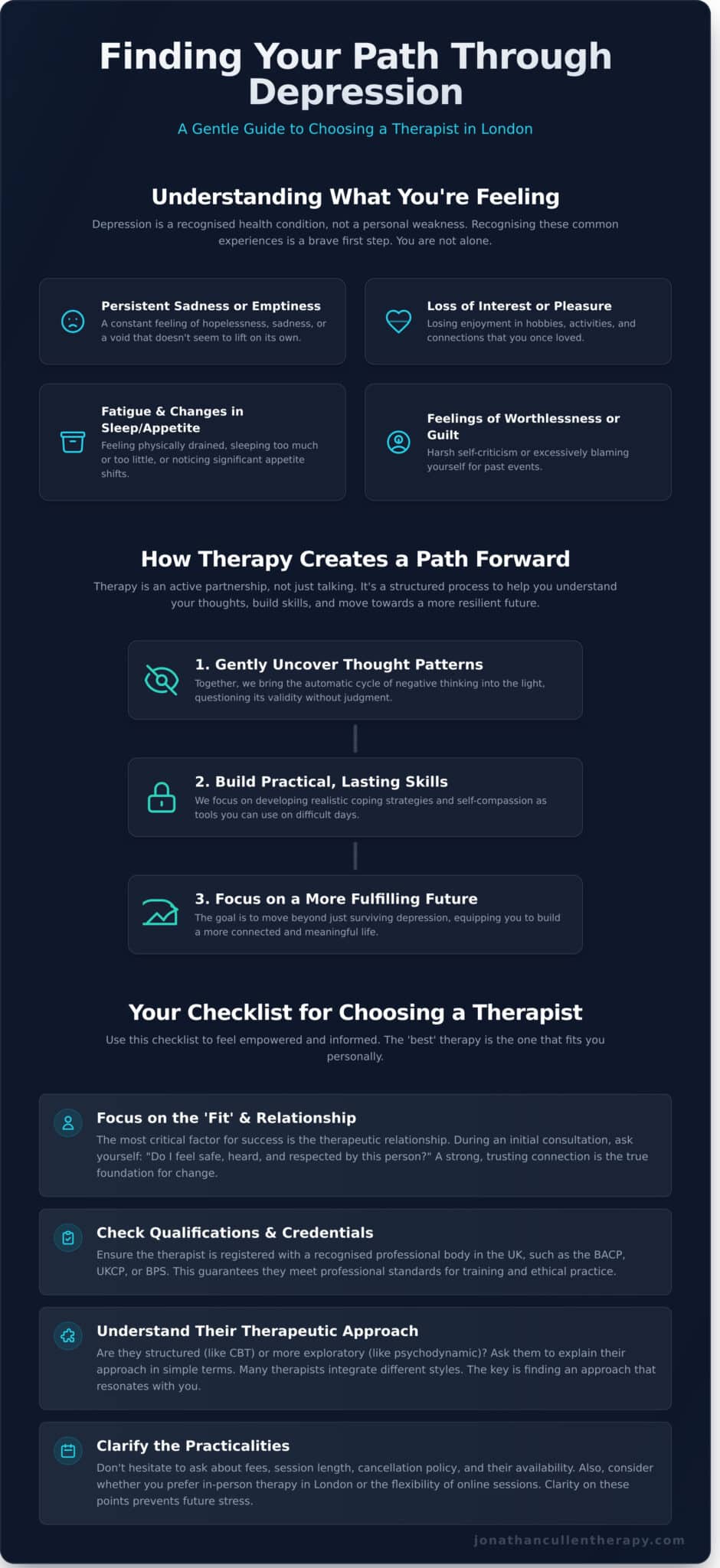
What Depression Can Feel Like
Does any of this sound familiar? While everyone’s experience is unique, depression often shows up in similar ways. You might be noticing:
- A persistent feeling of sadness, hopelessness, or emptiness that won’t go away.
- Losing interest or pleasure in hobbies and activities you once loved.
- Overwhelming fatigue, changes in your sleep patterns (sleeping too much or too little), or a significant shift in your appetite.
- Feelings of worthlessness or excessive guilt, often focusing on past events.
The First Step is the Hardest (and Bravest)
Reaching out to a depression therapist in London can feel daunting, but it is a proactive and powerful step towards reclaiming your well-being. Therapy offers a confidential and completely non-judgmental space where your unique story is honoured. Here, you can explore your feelings without fear of criticism. It’s a dedicated time for you to be heard, understood, and supported as we work together to find a path forward. You don’t have to face this alone.
How Therapy for Depression Works: A Look Inside the Process
Stepping into therapy for the first time can feel uncertain, but the process is more straightforward and collaborative than you might imagine. It’s far more than just talking about your problems; it’s an active partnership. In our sessions, I offer a warm, non-judgmental space where, together, we can explore the challenges you’re facing and build the skills you need to navigate them. The goal is to move beyond simply managing symptoms and towards a place of genuine understanding, resilience, and hope.
As your depression therapist in London, my role is to act as a guide, helping you see things from a new perspective and honouring your unique story every step of the way.
Breaking the Cycle of Depressive Thinking
Depression often traps us in a powerful cycle of negative thinking that can feel impossible to escape. Thoughts of self-criticism, hopelessness, and worthlessness can become automatic. In therapy, we gently bring these patterns into the light. Together, we will identify these recurring thoughts, question their validity, and begin to build a more compassionate inner voice. This isn’t about forcing positivity; it’s about developing self-compassion as a grounded, realistic antidote to harsh self-judgment.
Exploring the Roots, Building for the Future
While understanding where your feelings come from can be incredibly healing, we only explore your past if it feels right and helpful for you. Our primary focus is on the present and the future. We work to develop practical, down-to-earth coping strategies that you can use on difficult days. The ultimate aim is not just to help you survive depression, but to equip you with the insight and tools to build a more connected and fulfilling life. This collaborative process begins with finding the right professional, and resources such as the checklist on how to choose a depression therapist in London from NHS England can be a helpful part of your search.
Finding Your Fit: Common Types of Therapy for Depression
When you begin looking for a depression therapist in London, the variety of different therapeutic styles can feel overwhelming. You might see acronyms like CBT, psychodynamic, or person-centred and wonder which one is right for you. The most important thing to remember is that there is no single ‘best’ type of therapy. The most effective approach is the one that feels right for you and is built on a strong, trusting relationship with your therapist.
While many evidence-based models exist, as detailed in resources like the American Psychological Association’s guide to treatments for depression, the connection you build is the foundation for meaningful change. To help you understand your options, here are a few common approaches explained in a down-to-earth way.
Structured Approaches like CBT
Cognitive Behavioural Therapy (CBT) is a practical and goal-oriented approach. It focuses on the here and now, helping you identify and challenge the unhelpful thought patterns and behaviours that fuel depression. In our sessions, we might explore the direct link between your thoughts, your feelings, and your actions. This therapy is often more structured, and you may be invited to try practical exercises between sessions to build new, healthier habits. It’s an excellent fit if you’re looking for concrete tools to manage your symptoms.
Deeper, Exploratory Approaches
Sometimes, the weight of depression feels connected to our past. Psychodynamic therapy offers a compassionate space to explore how earlier life experiences and relationships may be shaping your present-day feelings. This is a less structured, more exploratory journey. Together, we would work to gently uncover and understand the deeper, often unconscious, patterns that might be keeping you stuck. This approach can be profoundly healing for those who want to understand the roots of their emotional pain.
A Personalised, Integrative Approach
I believe that therapy shouldn’t be a one-size-fits-all solution. As an integrative therapist, I draw on elements from different therapeutic models to create an approach that is tailored specifically to you. This means our work is flexible and responsive, adapting as your needs change. We might use practical CBT techniques one week and explore deeper patterns the next. This collaborative method honours your unique story, ensuring that you feel seen, heard, and supported in a way that truly makes sense for you.
Your Checklist: How to Choose a Depression Therapist in London
Finding the right person to talk to when you’re feeling low can seem like another overwhelming task. But this is a choice you can make with confidence. The goal isn’t to find the ‘best’ therapist, but to find the therapist who is the best fit for you. Think of this checklist as a calm, supportive guide to help you find a professional who honours your unique story and can help you on your journey towards feeling more connected and grounded.
Step 1: Check Qualifications and Specialisms
Starting with the practical details can help you create a manageable shortlist. A qualified professional will provide a safe and ethical space for you to explore your feelings. When looking for a depression therapist in London, here are a few key things to confirm:
- Accreditation: Are they registered with a recognised professional body, such as the BACP (British Association for Counselling and Psychotherapy) or UKCP (UK Council for Psychotherapy)? This ensures they meet high professional and ethical standards.
- Experience: Do they specifically mention experience in working with depression, low mood, or related challenges on their website or profile?
- Logistics: Do they offer sessions in a way that works for you? Consider whether you prefer in-person therapy in a specific part of London or the flexibility of online sessions.
Step 2: The Initial Consultation
Most therapists offer a free or low-cost introductory call (often around 15-20 minutes). This is not a commitment; it is a no-pressure opportunity for you to ask questions and get a sense of their personality and approach. It’s a two-way conversation. To prepare, you might consider asking: “How do you typically work with people experiencing depression?” or “What would our first few sessions look like?”
Step 3: Trust Your Gut Feeling
While qualifications are essential, the connection you feel with your therapist is one of the most significant factors in successful therapy. After your initial call, take a moment to reflect. Ask yourself:
- Did I feel heard, seen, and understood?
- Did their presence feel warm, compassionate, and non-judgmental?
- Could I imagine myself opening up to this person over time?
Remember, it is perfectly okay to speak with a few different therapists before making a decision. This is an investment in your well-being, and you deserve to find a supportive space where you feel truly comfortable. If my down-to-earth, client-centred approach resonates with you, I invite you to learn more about how we can work together.
A Supportive Space in London to Begin Your Journey
Understanding what depression is and the types of therapy available is the first step. The next, and often most personal, is finding a professional you can trust. If you are looking for a depression therapist in London who offers a warm, down-to-earth, and non-judgmental space, you have come to the right place. My goal is to move beyond clinical labels and connect with you as a person, honouring your unique story and experiences.
As we’ve explored in this article, therapy is not a one-size-fits-all solution. This is why my practice is built on a tailored, integrative approach, combining different therapeutic insights to create a plan that genuinely supports you. For those seeking local, in-person therapy, my private practice is based in Hendon, North West London, providing a calm and accessible environment to begin our work together.
My Approach to Working With Depression
My primary focus is on creating a safe, compassionate therapeutic relationship where you feel seen and heard. This is the foundation from which we can gently explore the patterns, thoughts, and feelings that are keeping you stuck. Together, we will work to understand the roots of your depression and find meaningful, practical ways for you to reconnect with yourself, your relationships, and a sense of purpose.
Taking the Next Step
Reaching out for support is a courageous act, but it doesn’t need to be a daunting one. The first step is simply a conversation to see if we are a good fit, with no pressure or obligation. It’s an opportunity for you to ask questions, share a little about what’s on your mind, and get a feel for how we might work together.
When you feel ready, I invite you to book a confidential, no-obligation consultation to see if we’re a good fit. You don’t have to face this alone.
Your Journey to Feeling Better Begins Here
Embarking on the path to find support is a significant and hopeful step. This guide has shown that understanding depression is key, and that the most important part of your search for a depression therapist london is finding someone you truly connect with. It’s about discovering a professional who honours your unique story and creates a space where you feel safe to explore your thoughts and feelings without judgment.
If you feel ready to talk, I’m Jonathan Cullen, an accredited Integrative Psychotherapist (UKCP). From my practice in Hendon, North West London, I provide a warm, compassionate, and confidential environment to help you on your journey. You don’t have to face this alone. Take the first step: Book a confidential consultation to see if we are a good fit.
Remember, seeking help is an act of courage. A calmer, more grounded future is within your reach.
Frequently Asked Questions
What is the difference between counselling and psychotherapy for depression?
While the terms are often used interchangeably, counselling typically focuses on specific, present-day issues over a shorter period. Psychotherapy, on the other hand, often involves a longer-term journey to explore deeper, underlying emotional patterns and past experiences that contribute to your depression. Both offer a supportive, non-judgmental space. The best approach for you depends on your unique story and what you hope to achieve, which we can explore together in our initial consultation.
How long does therapy for depression usually take?
The length of therapy is a personal journey and varies for everyone. Some people find significant relief from short-term therapy (around 6-12 sessions), focusing on specific coping strategies. Others benefit from longer-term, open-ended work to explore the root causes of their depression more deeply. Together, we will regularly review your progress and ensure the pace feels right for you, honouring your unique needs and goals without any pressure or fixed timeline.
Is what I say in therapy confidential?
Yes, absolutely. Confidentiality is the cornerstone of a safe and trusting therapeutic relationship. Everything you share in our sessions is held in the strictest confidence. The only exceptions are rare situations where there is a serious risk of harm to yourself or others, or if required by law. This is an ethical requirement for all accredited therapists in the UK, and we would discuss these limits clearly from the very beginning to ensure you feel secure.
How much does a private depression therapist cost in London?
The cost for a private depression therapist in London can vary significantly based on their experience and location. You can typically expect rates ranging from £70 to over £150 per session. It’s important to view this as an investment in your long-term wellbeing. I believe in being transparent about fees, and you can find my specific session costs on my fees page. Some therapists may also offer a limited number of lower-cost slots.
Can I get therapy for depression on the NHS?
Yes, you can access therapy for depression through the NHS. The first step is usually to speak with your GP, who can refer you to your local IAPT (Improving Access to Psychological Therapies) service. While this is a valuable resource, it’s worth noting that there can often be long waiting lists, and the number of sessions offered may be limited. Private therapy offers a way to be seen much more quickly and allows for more flexibility in the type and duration of support.
What should I expect in my first therapy session?
Your first session is a gentle introduction, designed to help you feel as comfortable as possible. It’s an opportunity for us to get to know one another and for you to see if I feel like the right fit for you. We’ll talk about what brought you to therapy, your hopes, and any concerns you might have. It’s not an interrogation, but a warm, collaborative conversation to begin exploring your unique story in a supportive space. You don’t have to have it all figured out.
Do I need a GP referral to see a private therapist?
No, you do not need a GP referral to see a private therapist. One of the main benefits of private therapy is the ability to self-refer, giving you complete control over when you seek help and who you choose to see. This allows you to find a therapist who feels right for you without any delays. You can simply contact me directly to arrange an initial consultation and begin your journey towards feeling better.
Can therapy help even if I’m taking antidepressants?
Yes, definitely. Therapy and medication can be a very effective combination for treating depression. While antidepressants can help manage the symptoms, making it easier for you to engage in daily life, therapy provides a space to explore the root causes. Together, we can work on developing coping strategies, understanding emotional patterns, and building resilience for long-term mental wellbeing. They are two different tools that can support each other wonderfully on your path to recovery.