
That persistent hum of worry in the background, the feeling of being overwhelmed without a clear reason—it can be an incredibly isolating experience. If you’ve ever felt lost in a fog of anxious thoughts, wondering why you feel this way, please know you are not alone. This feeling of being adrift is common, especially when we don’t have the language to describe what’s happening. The word ‘anxiety’ itself is a huge umbrella, and understanding the different anxiety kinds can be the first step towards making sense of it all and finding your footing again.
This gentle guide is here to offer that clarity. Together, we will compassionately explore the most common ways anxiety can show up, moving away from confusing clinical jargon and towards a grounded, down-to-earth understanding. Our journey is to help you put a name to your feelings, feel seen in your experience, and see that a supportive path forward is always possible. You don’t have to face this alone.
Key Takeaways
- Understand the crucial difference between everyday stress and a persistent anxiety disorder, helping you validate your own experiences.
- Gently explore the most common anxiety kinds to find language that helps make sense of what you’re feeling.
- Recognise how anxiety can be connected to specific experiences or other conditions, which is often key to finding the right support.
- Gain clarity on your experiences, empowering you to take the first compassionate step towards feeling more in control.
What is Anxiety? More Than Just ‘Worrying’
If you’re reading this, chances are you know the feeling all too well: the tight chest, the racing thoughts, the persistent sense of dread that can feel overwhelming. It’s important to know that you are not alone in this. While everyone experiences stress or worries from time to time, anxiety as a persistent state is something different. Think of it as your body’s natural alarm system—the “fight or flight” response that’s designed to protect you from danger. This system is incredibly useful when you need it. The problem arises when that alarm gets stuck in the ‘on’ position, sounding alerts even when there is no real threat. Understanding this distinction is the first step toward exploring the different anxiety kinds and finding a path toward feeling more grounded.
The Mind-Body Connection in Anxiety
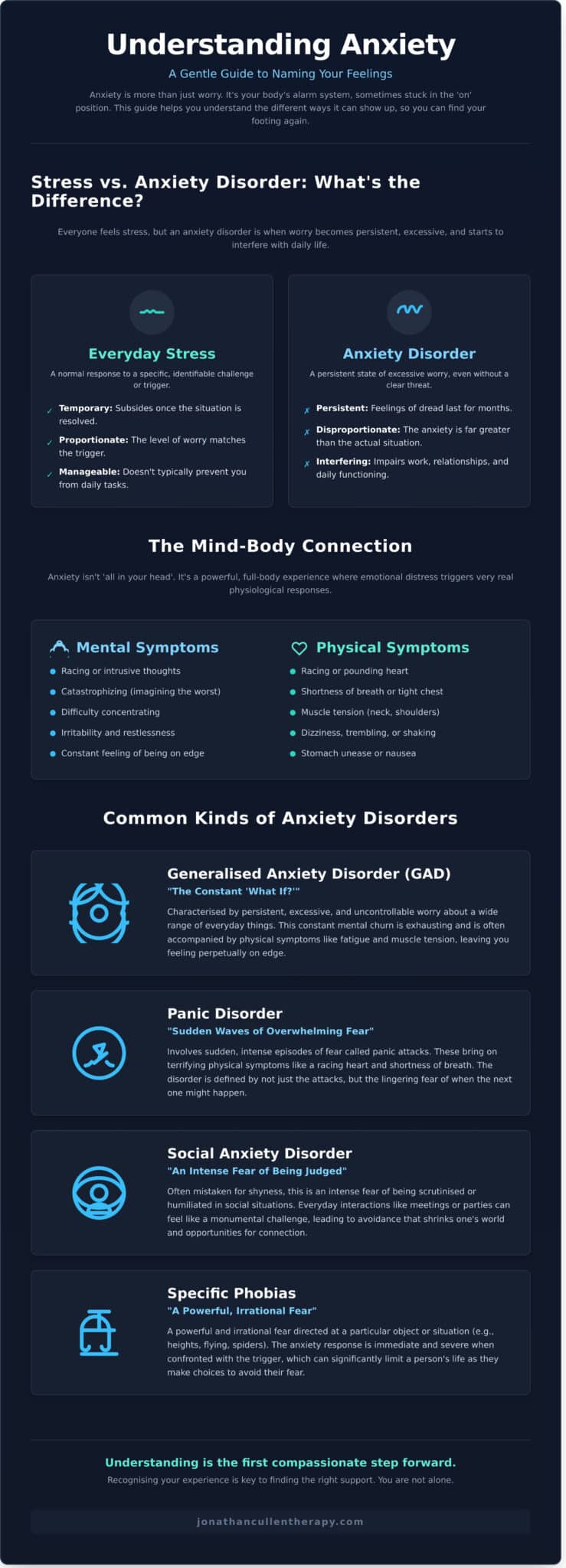
Anxiety is not ‘all in your head’; it’s a powerful, full-body experience where your mind and physical state are deeply connected. The emotional distress triggers very real physiological responses. Recognising these symptoms is a key part of understanding your own experience. Common signs include:
- Physical Symptoms: A racing or pounding heart, shortness of breath, muscle tension (especially in the neck and shoulders), dizziness, trembling, and stomach unease.
- Mental Symptoms: Racing or intrusive thoughts, catastrophizing (imagining the worst-case scenario), difficulty concentrating, irritability, and a constant feeling of being on edge.
These physical feelings are genuine responses from your nervous system. Validating them as real is a compassionate and crucial step toward managing them.
When Does Anxiety Become a Disorder?
So, where is the line between a normal human emotion and a condition that needs support? Anxiety may be considered a disorder when the feelings become excessive, are disproportionate to the situation at hand, and start to interfere with your ability to live your life. When worry prevents you from going to work, damages relationships, or makes daily tasks feel impossible, it’s time to seek understanding. For those wanting to learn more, Wikipedia provides a comprehensive overview of anxiety disorders that outlines the clinical criteria. It’s helpful to remember that a diagnosis isn’t a label to define you; it’s a tool to help you and professionals understand what you’re experiencing, making it possible to find the most effective support for your unique story.
The 5 Most Common Kinds of Anxiety Disorders
Anxiety doesn’t look the same for everyone. It can feel like a constant, low hum of worry or a sudden, overwhelming wave of panic. Understanding the most common patterns can be the first step toward compassion for yourself and your experience. It’s important to remember that these are not rigid boxes; it’s common to see features of more than one type in your own life. This guide is here to help with recognition and self-understanding, not self-diagnosis. While many different anxiety kinds are recognised by professionals, as detailed in resources like this guide from the NIMH on anxiety disorders, we will gently explore some of the most common experiences below.
Generalised Anxiety Disorder (GAD): The Constant ‘What If?’
This is more than just being a ‘worrier’. GAD is characterised by persistent and uncontrollable worry about a wide range of things. A small concern, like an upcoming bill, can spiral into a cascade of ‘what ifs’ about your job, your home, and your future. This constant mental churn is exhausting and often comes with physical symptoms like muscle tension, fatigue, and irritability, leaving you feeling perpetually on edge.
Panic Disorder: Sudden Waves of Overwhelming Fear
Unlike the steady hum of GAD, panic disorder involves sudden, intense episodes of fear known as panic attacks. These can bring on terrifying physical symptoms—a racing heart, shortness of breath, dizziness—that often feel life-threatening. The core of the disorder is not just the attack itself, but the intense, lingering fear of when the next one might happen. It’s vital to know that while they feel incredibly frightening, panic attacks are not dangerous.
Social Anxiety Disorder: An Intense Fear of Being Judged
Often mistaken for simple shyness, social anxiety is an intense fear of being scrutinised, judged, or humiliated in social or performance situations. It can make everyday interactions, like speaking in a work meeting, attending a party, or even making a phone call, feel like a monumental challenge. This fear can lead to avoidance, causing your world and your opportunities for connection to shrink over time.
Specific Phobias: A Powerful Fear of a Certain Thing or Situation
A specific phobia is a powerful and irrational fear directed at a particular object or situation. Common examples include the fear of heights (acrophobia), flying (aviophobia), or spiders (arachnophobia). When confronted with the trigger, the anxiety response is immediate and severe. This can significantly limit a person’s life, forcing them to make choices based on avoiding their fear rather than pursuing their goals and joys.
Anxiety Related to Specific Triggers and Experiences
Sometimes, the feeling of anxiety isn’t a constant, floating presence. Instead, it becomes sharply focused on a particular situation, thought, or past experience. Understanding the focus of your anxiety is a compassionate and vital step on the journey to feeling more grounded. These specific anxiety kinds can exist on their own or alongside the more generalised forms we’ve discussed. Recognising them is about validating your unique story and seeing your worries for what they are. While this guide explores common experiences, the American Psychiatric Association provides a helpful resource, What Are Anxiety Disorders?, for further reading.
Health Anxiety: Constant Worry About Illness
Health anxiety, sometimes known as illness anxiety, is an intense preoccupation with the fear of having or developing a serious medical condition. This goes far beyond reasonably caring for your health. It often involves frequent body-checking for signs of illness, seeking constant reassurance from others, or misinterpreting normal bodily sensations (like a headache or a muscle twitch) as catastrophic. It’s a draining cycle of worry that can make it difficult to trust your own body and feel safe in it.
Obsessive-Compulsive Disorder (OCD)
OCD involves a pattern of unwanted, intrusive thoughts and fears, known as obsessions. These obsessions trigger intense anxiety, which leads to repetitive behaviours, or compulsions, performed in an attempt to relieve that distress. A common example is an obsessive fear of contamination leading to the compulsion of excessive handwashing. While OCD is now in its own diagnostic category, it is deeply connected to anxiety, as the compulsions are driven by a need to manage overwhelming fear.
Post-Traumatic Stress Disorder (PTSD)
PTSD can develop after experiencing or witnessing a terrifying or traumatic event. The anxiety here is directly tied to the memory of that trauma. Key symptoms include intrusive memories like flashbacks and nightmares, severe avoidance of anything that reminds you of the event, and feeling hypervigilant or easily startled, as if your body is always on high alert for danger. Like OCD, PTSD is a distinct diagnosis, but anxiety is one of its absolute core features.
How Anxiety Can Overlap with Other Conditions
Anxiety rarely exists in a vacuum. It is often deeply connected to other conditions and life experiences, and understanding these links can be a powerful step toward finding compassionate, effective support. Seeing the whole picture helps us move beyond treating just one symptom and allows us to honour your unique story. The way different anxiety kinds show up can often be shaped by these co-occurring challenges.
The Link Between Anxiety and Depression
Often described as two sides of the same coin, anxiety and depression frequently walk hand-in-hand. It’s incredibly common to experience both, and they can create a difficult cycle. The relentless worry and physical tension of anxiety can drain your energy, leading to the low mood, fatigue, and hopelessness of depression. In turn, feeling depressed can make it feel impossible to challenge anxious thoughts, leaving you feeling stuck. A supportive therapeutic approach addresses both, recognising their deep connection rather than treating them as separate issues.
Anxiety and ADHD: A Neurodivergent Perspective
For many neurodivergent people, especially those with ADHD, anxiety can feel like a constant companion. This isn’t a personal failing; it’s often a direct result of navigating a world not built for your brain. Challenges with executive functions—like managing deadlines, staying organised, or initiating tasks—can create a persistent backdrop of stress and a fear of “not keeping up.” This is often intensified by experiences like Rejection Sensitive Dysphoria (RSD), an extreme emotional pain tied to perceived criticism or rejection, which can directly fuel social anxiety.
Working with an ADHD-informed therapist who understands this link is vital for finding strategies that work with your neurotype, not against it.
Seeing how the different anxiety kinds connect with other experiences is not about collecting more labels. It’s about gaining a clearer, more compassionate understanding of yourself. If this holistic picture resonates with your own journey, please know that support is available, and you don’t have to figure it all out alone.
Your Path Forward: Taking the First Step
Reading through a list of different anxiety kinds can feel overwhelming. You might recognise yourself in several descriptions, and that realisation can be unsettling. But please know this: what you’ve just gained is clarity, and clarity is power. Understanding the shape of your anxiety is the very first step toward managing it.
The goal isn’t to live a life completely free from anxiety—it’s a natural human emotion, after all. The true aim is to stop it from running your life, so you can feel more grounded, connected, and in control.
How Can Therapy Help with Anxiety?
If you’re wondering what comes next, therapy offers a compassionate, non-judgmental space to explore these feelings. It’s a collaborative journey where we can work together to:
- Identify triggers and patterns: We can gently uncover the specific situations, thoughts, and feelings that fuel your anxiety, helping you understand them better.
- Learn coping strategies: You’ll develop practical, down-to-earth techniques to manage physical symptoms and challenging thoughts in the moment.
- Explore the roots: In a safe and supportive environment, we can explore the deeper experiences that may be at the root of your anxiety, honouring your unique story.
- Feel supported: Most importantly, therapy is a space where you don’t have to face it alone.
Finding the Right Support For You
The relationship you have with your therapist is one of the most important parts of the process. It’s essential to find someone you feel comfortable and safe with. When looking for support with the various anxiety kinds, it can be helpful to seek a therapist who specialises in this area. Most therapists, including myself, offer an initial consultation. This is a chance for you to ask questions and get a feel for their approach, ensuring it’s the right fit for you.
If you feel ready to take that next step, I invite you to learn more about my warm, down-to-earth approach to anxiety therapy.
Your Path Forward: Finding Clarity and Support
Recognising that anxiety is far more than just ‘worrying’ is a powerful first step toward feeling better. As we’ve seen, there are many different anxiety kinds, and putting a name to your experience can bring a profound sense of clarity. Your journey is unique, especially as anxiety can often overlap with other conditions, including neurodiversity like ADHD. This understanding is not a label, but a starting point for compassion and change.
You don’t have to navigate what comes next by yourself. I provide a warm, supportive, and non-judgmental space where we can explore your story together. Using an integrative psychotherapy approach that honours your unique experience, and with my own lived experience of ADHD, I am here to help you find a more grounded way forward. If you feel ready, please reach out.
You don’t have to figure this out alone. Let’s talk.
Frequently Asked Questions About Anxiety
What is the most common kind of anxiety?
It’s a common experience, and you’re not alone in this. While specific phobias (like a fear of flying or spiders) are widespread, Generalised Anxiety Disorder (GAD) is one of the most frequently diagnosed conditions. It involves persistent and excessive worry about various aspects of life. It’s that constant ‘what if’ feeling that can be difficult to control, but with compassionate support, it is absolutely manageable.
Can anxiety be cured, or is it a lifelong condition?
It’s often more helpful to think of this as a journey of management rather than a search for a ‘cure.’ While anxiety is a natural human emotion, an anxiety disorder doesn’t have to define your life. Through therapy, we can work together to develop supportive coping strategies and understand your triggers. The goal is to help you build a fulfilling life where you feel grounded and in control, not the anxiety.
How do I know if my anxiety is ‘bad enough’ to need therapy?
This is a question many people ask, and there is no official ‘bad enough’ line. A gentle way to explore this is to ask yourself: is my anxiety getting in the way of the life I want to live? If worry or fear consistently impacts your relationships, work, or your ability to feel joy, seeking support is a courageous and positive step. You don’t have to wait for a crisis to find a supportive space for yourself.
What is the difference between everyday stress and an anxiety disorder?
Think of stress as a response to a specific, external pressure, like a tough deadline at work. It usually subsides once the situation is resolved. An anxiety disorder, however, often feels more internal and persistent. The worry can linger long after a stressful event has passed, or even appear without a clear reason. It’s the difference between feeling nervous for a presentation and feeling a sense of dread for weeks beforehand.
Is it possible to have more than one type of anxiety at the same time?
Yes, it is very common, and it’s okay. The human experience is complex, and our anxieties can be, too. For example, someone might live with Generalised Anxiety Disorder but also experience panic attacks or a specific social phobia. Understanding the different anxiety kinds you’re experiencing is a key part of therapy. Together, we can gently explore these threads and create a supportive path forward that honours your unique story.
What is a simple technique I can use when I feel anxious right now?
When you feel overwhelmed, a grounding technique can bring you back to the present moment. Try the ‘5-4-3-2-1’ method. Pause and gently notice: five things you can see, four things you can feel (like your feet on the floor or the texture of your chair), three things you can hear, two things you can smell, and one thing you can taste. This simple act connects you to your senses and offers a moment of calm.